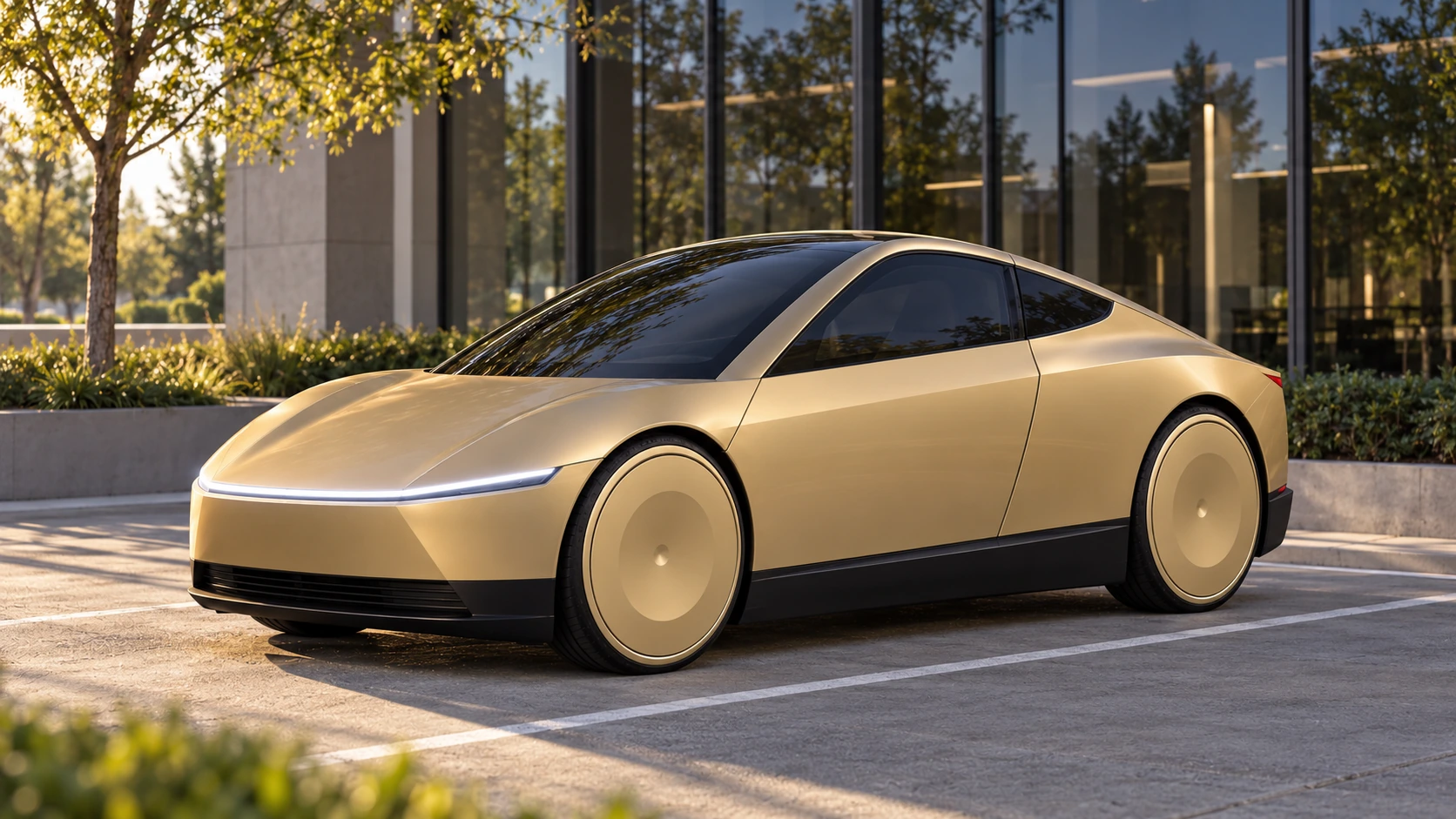
Tesla’s Cybercab has entered commercial service in Austin, bringing its purpose-built driverless vehicle onto public streets. The launch on September 3 was followed a day later by a federal investigation into the vehicle’s safety certification. Reuters
For passengers, the defining change is inside the cabin: two seats, no steering wheel and no accelerator or brake pedal. Tesla’s own rider guide confirms that both occupants travel as passengers. Tesla Cybercab Rider Guide
The rollout is a concrete step for autonomous transport. It also puts a practical question at the center of Tesla’s AI ambitions: what does a dependable transport service look like when passengers cannot take over the driving?
What has actually launched?
Tesla initially deployed a small number of Cybercabs in Austin and plans to expand to more vehicles and locations. Reuters reported that 45 Cybercabs were registered in Texas as of September 4. Registration numbers should not be treated as a count of vehicles simultaneously carrying passengers. Reuters
That makes this an initial commercial deployment, with the scale and consistency of wider operations still to be demonstrated.
How does AI turn a car into a robotaxi?
Driving involves several connected problems: identifying what is around the vehicle, anticipating movement and choosing how to respond. AI helps convert sensor measurements into useful decisions. The following explanation separates Tesla’s published approach from general autonomous-driving concepts; it is not a specification of Cybercab’s complete production software.
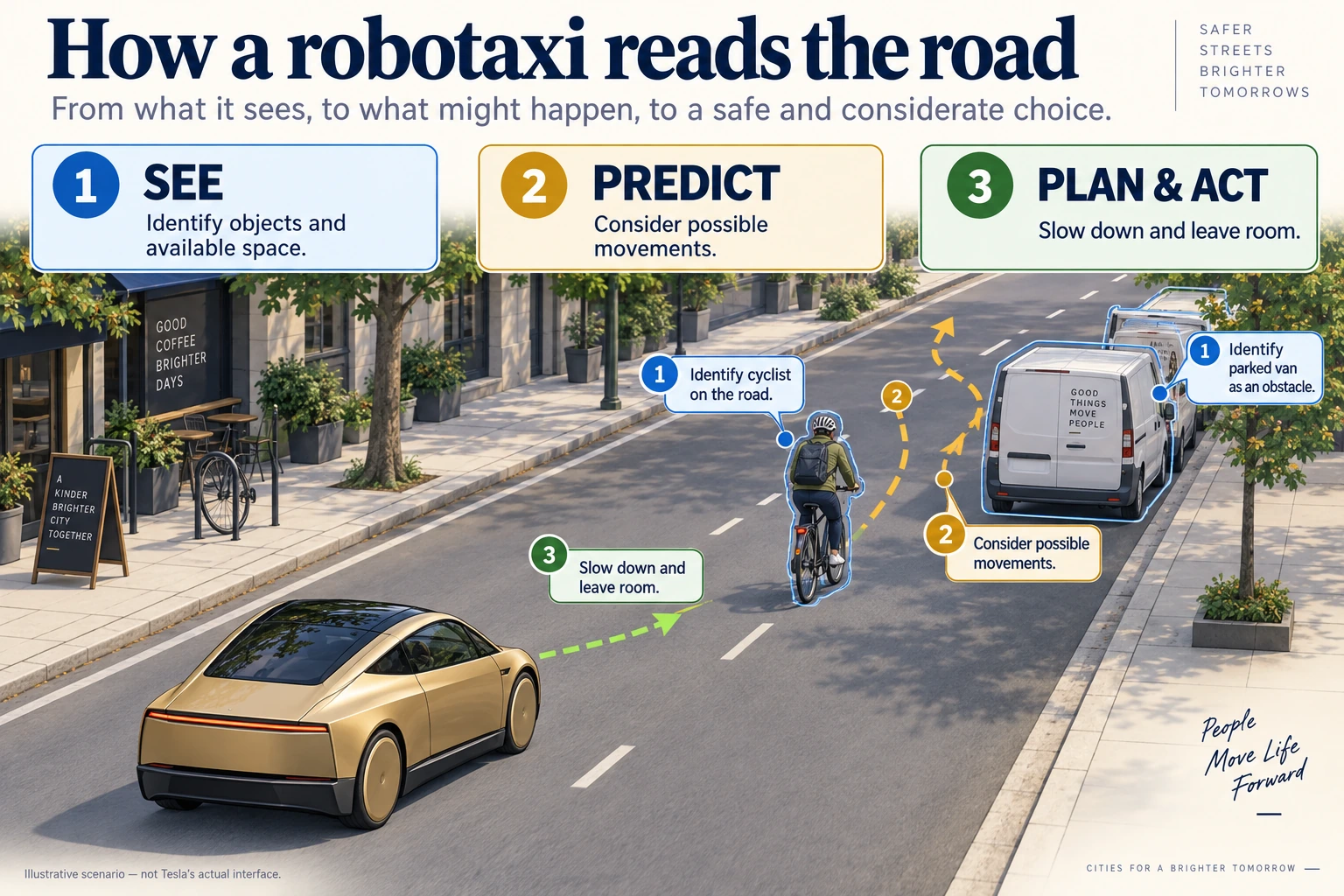
Seeing: turning camera images into a road scene
Tesla describes neural networks that process camera images to identify objects, estimate depth and combine multiple views into a representation of road layout and three-dimensional surroundings. In plain language, the software extracts information about what is present and where it is. Video adds the changing scene over time. Tesla AI & Robotics
Imagine a cyclist beside a parked delivery van. Recognizing a bicycle is only the beginning. The useful questions include how much space separates the cyclist from the van and whether that gap is closing. This illustrative example shows why recognizing objects alone cannot solve driving.
Predicting: considering what could happen next
Waymo describes using AI to anticipate multiple possible paths for other road users, then combining those predictions with its surroundings and location to plan motion. This explains a general challenge facing robotaxis; it does not establish that Tesla uses Waymo’s architecture. How the Waymo Driver works
In our cyclist example, the rider might continue straight, stop or move around the van. A sensible response would leave room for that uncertainty. Waiting for the cyclist to enter the car’s path could leave much less time to react.
Acting: choosing a path and a speed together
Tesla says its autonomy work includes representing the environment and planning vehicle trajectories under uncertainty. Its dedicated AI chips run driving software in the vehicle. This use of a trained model is called inference: applying what the model has learned to new inputs. Tesla AI & Robotics
For the imagined encounter, easing off early could give the cyclist room while avoiding abrupt braking. The goal is a maneuver that makes sense for everyone nearby. Smoothness is useful, but it must remain secondary to adequate safety margins.
How does the AI improve?
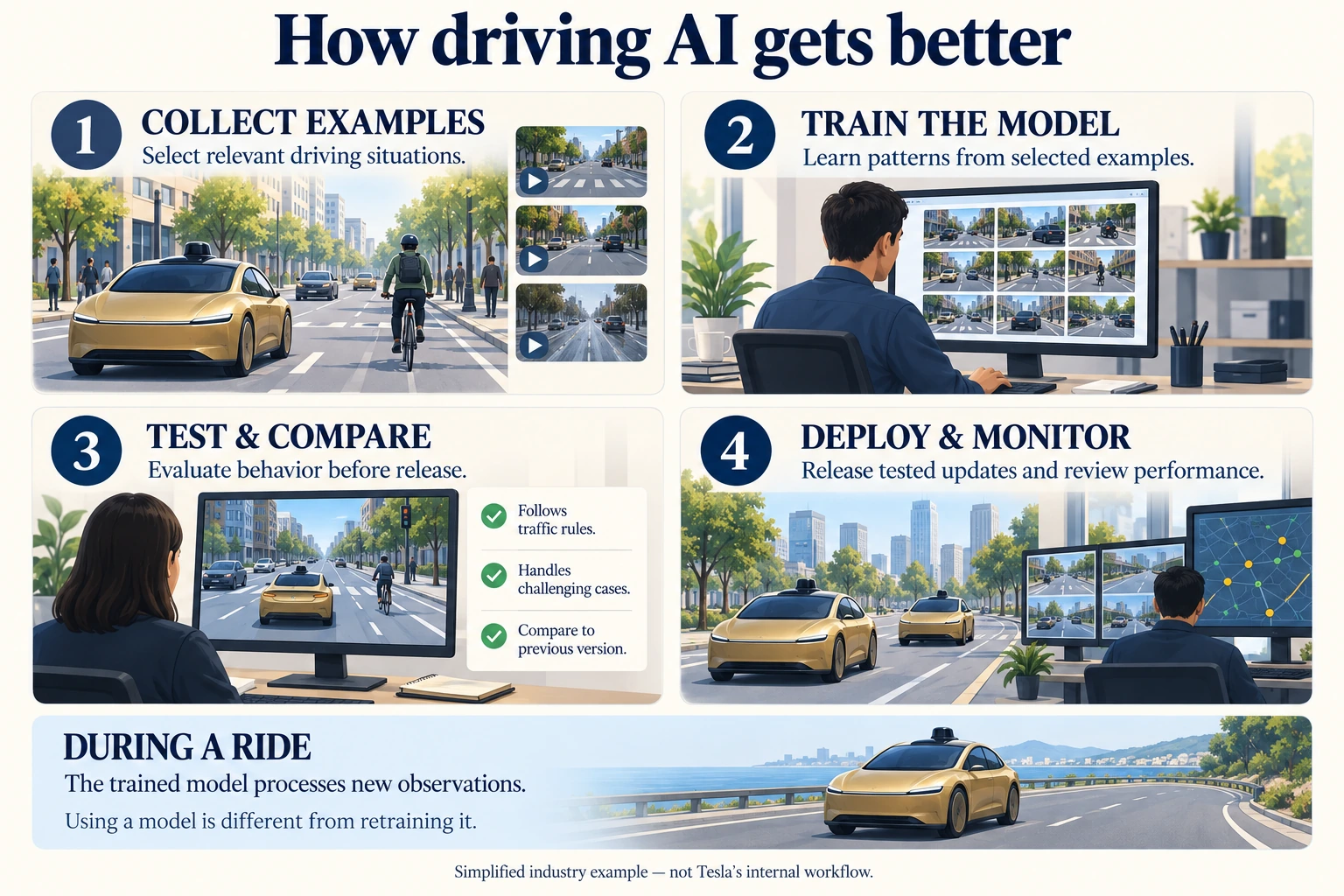
Tesla says it sources varied driving scenarios from its fleet to train neural networks and uses evaluation tools, recorded clips and simulation to test changes and detect regressions. That describes a development process; it is not evidence that every Cybercab retrains itself during passenger trips. Tesla AI & Robotics
A useful distinction is between updating the vehicle’s picture of the road and updating the underlying model. Following a cyclist’s changing position during a trip is a different task from developing a better model for future software releases.
Why simulated driving matters
Simulation allows researchers to evaluate behavior in controlled scenarios. Waymo’s published Waymax research tool uses recorded driving situations and measures outcomes such as collisions, leaving the road and driving the wrong way. It also distinguishes replaying recorded traffic from modeling traffic that reacts to the simulated vehicle. This is an industry research example, not a tool we have verified Tesla uses. Waymax research
Do all robotaxis use the same technology?
No. Tesla’s published AI approach emphasizes vision and planning. Waymo describes combining cameras with lidar, which measures distance using laser light, and radar, which supplies distance and speed information. Waymo also uses detailed maps alongside live sensor data. These are different engineering approaches to understanding the same changing road environment. Tesla AI & Robotics, Waymo Driver technology
For readers assessing the competing approaches, sensor choice is one part of the question. The practical result depends on the complete system’s behavior, including its response when observations are incomplete or uncertain.
Is this the same AI as a chatbot?
Autonomous-driving research increasingly explores foundation models, including vision models and systems that combine different input types. A research survey describes applications in object detection, tracking, planning and simulation. Those research directions do not establish that Cybercab uses a chatbot or any particular language model. A Survey for Foundation Models in Autonomous Driving
The important connection is the ability to learn useful representations from data. The output required here is physical action: a vehicle must move through traffic with appropriate timing and safety margins. An explanation that sounds plausible is insufficient evidence that a driving decision is safe.
Why the safety regulator is investigating
The National Highway Traffic Safety Administration announced an Audit Query on September 4