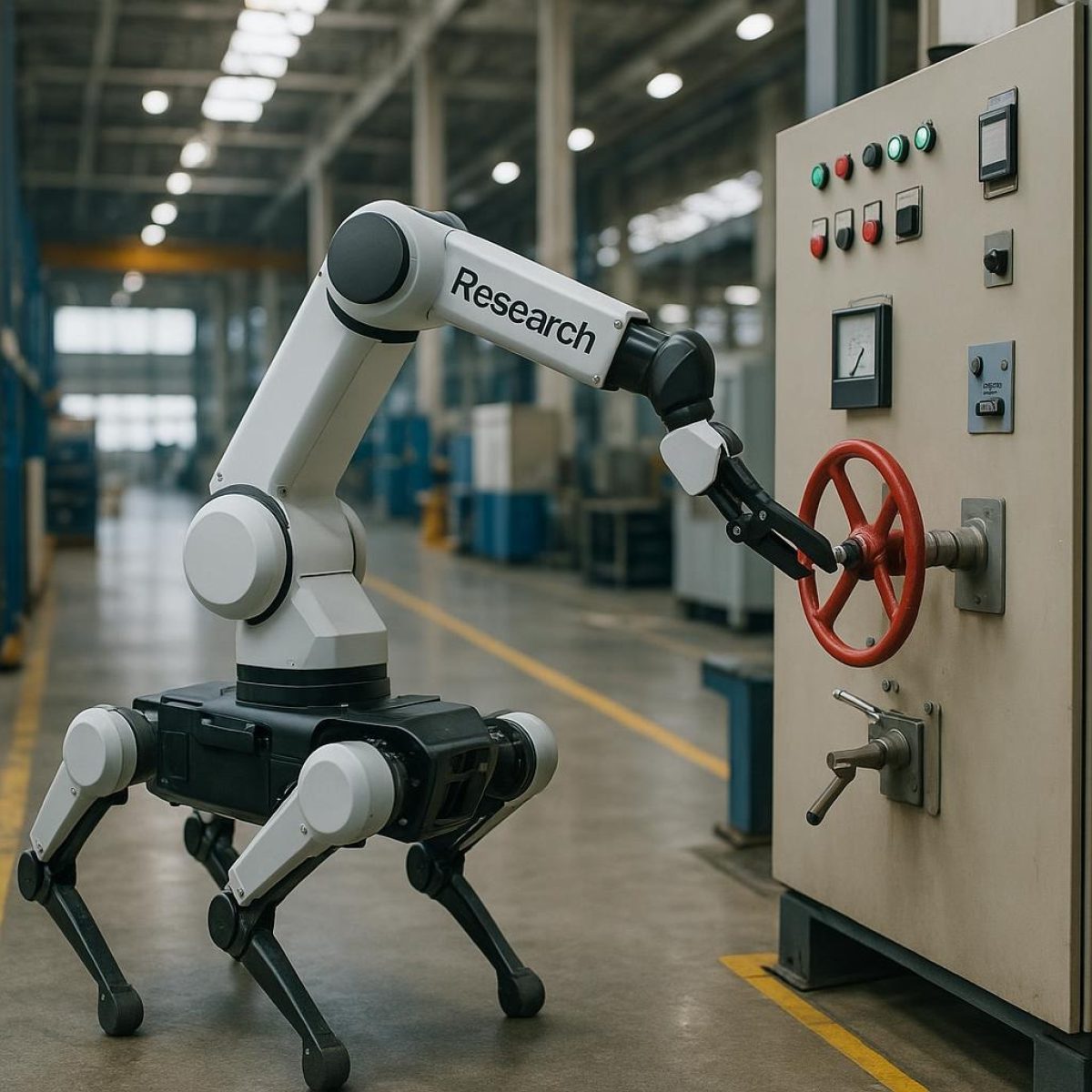
NVIDIA Research used ICRA to show how simulation is moving from a lab toy to a usable training and validation layer for real robots. A NVIDIA Blog AI post summarizes several papers that link higher-fidelity simulators, large synthetic datasets, and cross-task transfer methods into a repeatable sim-to-real pipeline. The result is a clearer path from experiments in software to robots in the field.
The real issue
The key development is practical: NVIDIA’s ICRA papers demonstrate how better simulators and bigger synthetic datasets, combined with transfer techniques, can narrow the long-standing “reality gap.” The work isn’t a single demo. It’s a set of engineering steps tied together by shared tooling – notably Isaac Sim and pretrained model stacks – that form a workflow for training and validating embodied agents before they touch hardware.
Put simply: teams can train in a photoreal simulator, expand robustness with large synthetic corpora, and use cross-task transfer to make models hold up better when moved to real robots. That shifts simulation from an experimental aid to a repeatable layer in the development cycle.
Why this matters now
Two near-term effects make these papers consequential for people building or buying robots.
Lower cost and risk. Higher-fidelity sims plus access to GPU clusters let teams run many more trials in software, find failure modes earlier, and cut down costly hardware test cycles. For enterprises that care about safety or uptime, that shortens pilot timelines and reduces expensive retries in the real world.
Faster iteration favors platformed teams. Groups that combine GPU access, mature simulators, and ready tooling will iterate and ship faster. That gives an edge to platform providers and well-funded robotics-first startups over smaller teams that lack cloud GPU scale or integrated stacks. For practical tooling context, see the AI tools hub.
What to watch next
- Enterprise pilot reports: customer case studies showing faster rollouts or clear cost savings from sim-driven development.
- Open releases: availability of large synthetic datasets, simulation scenes, or pretrained checkpoints that teams can reuse outside closed stacks.
- Partner integrations: announcements from robotics OEMs, cloud providers, or automation vendors adopting Isaac Sim, NVIDIA toolchains, or similar runtimes.
If those signals appear together – pilot wins, reusable open assets, and broad partner integration – sim-to-real will likely become a repeatable commercial path for industrial automation rather than a series of one-off demos.