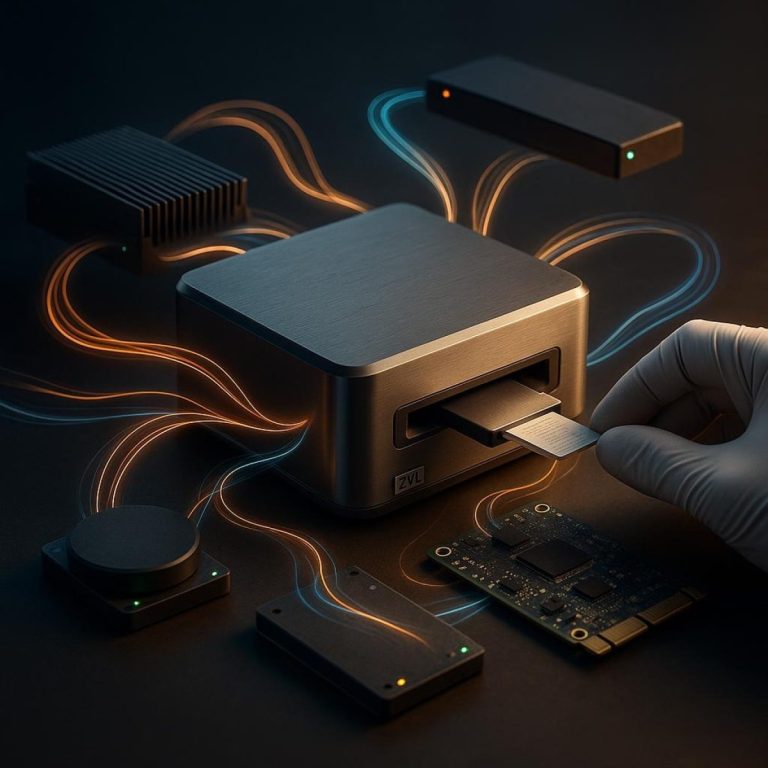
NVIDIA announced the Factory Operations Blueprint (FOX) at GTC Taipei, a reference design that stitches live machine telemetry, quality systems, work instructions and alerts into a single AI decision layer for plant-wide autonomy. The move packages hardware, edge inference and software patterns into a vendor-backed path toward real-time, factory-level AI operations.
The real issue
FOX is a blueprint, not a finished product: NVIDIA lays out how to connect sensors, PLC outputs, cameras, MES feeds and operator instructions into a unified decision loop that can run at the edge. The company describes a stack that spans edge GPUs for inference, telemetry fabrics for secure streaming, pretrained building blocks for model ops, and recommended integration points for digital twins and alerts. NVIDIA published the details on its blog and presented the design at GTC Taipei / COMPUTEX to accelerate partner adoption.
What changed is the framing: instead of selling discrete chips or models, NVIDIA is offering an end-to-end pattern vendors and systems integrators can adopt. That lowers the architectural guesswork for customers who want plant-wide decisions-shifting the buyer conversation from prototype proofs to deployment pathways backed by a single vendor’s reference design.
Why this matters now
Two financial pressures make FOX timely. First, manufacturers are past isolated pilots and need predictable paths to measurable ROI; an approved blueprint shortens integration time and may reduce retrofit costs for large plants. Second, the underlying stack readiness-denser edge inference hardware, private 5G and improved ML-ops toolchains-means reference designs are suddenly practical rather than theoretical.
That said, FOX tightens vendor influence. Companies must weigh faster deployment against potential lock-in, data-sharing obligations, and retrofit bills for older equipment. Manufacturers should also keep model risk and operational safeguards in mind-see our recent piece “AI language models threaten research integrity – a timely risk warning” for how model behavior and governance can create unexpected problems outside the lab.
What to watch next
- OEM and systems integrator product moves: watch for packaged FOX integrations, subscription pricing, or turnkey offers that make pilots easy to buy and scale.
- Pilot results with numbers: early case studies that report throughput, yield, or downtime improvements alongside full cost and retrofit time will decide buyer confidence.
- Competing blueprints and interoperability pledges: responses from Siemens, Rockwell, AWS or open projects that promise cross-vendor connectors will determine whether customers can avoid single-vendor lock-in.
For teams evaluating FOX, treat it as a commercial accelerant: useful for shortening the path to plant-level AI, but plan procurement and data plans to limit lock-in and ensure pilots report clear business metrics.
Source: NVIDIA Blog AI (announcement at GTC Taipei / COMPUTEX).