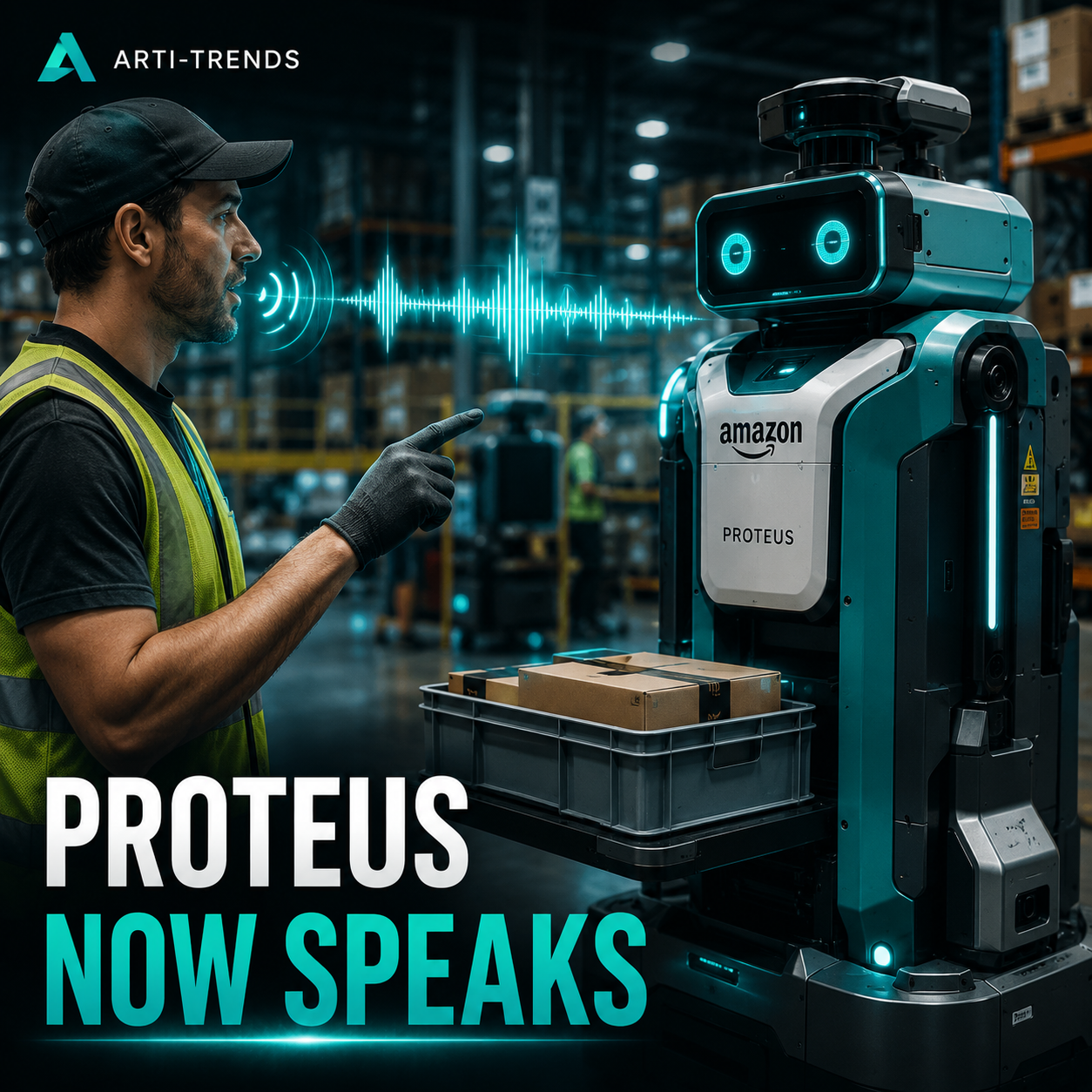
Amazon has upgraded its Proteus warehouse robot so staff can give spoken, natural-language instructions and get conversational responses, The Verge AI reports. The upgrade moves control from consoles and code to voice and dialog, letting line workers reroute items, assign tasks, and handle exceptions with plain speech.
The real issue
The important change is the interface, not a new sensor or motor. Adding voice and a lightweight language layer shifts decision-making away from specialist operators and terminals toward conversational interaction on the floor.
That matters because language lowers training needs and speeds up onboarding. Workers can tell the robot what to do without custom software or dedicated console time, and they can resolve mistakes or unusual cases faster. According to The Verge, Proteus now pairs autonomy with LLM-driven dialogue so people can negotiate a missed pick or reroute an item in natural speech.
Robotics teams have long focused on perception and motion. The new layer doesn’t replace those advances; it changes who makes routine choices and how quickly the system adapts in real operations. In plain terms: this makes using robots cheaper and easier, which strengthens the financial case for automation in real warehouses.
Why this matters now
The move is both technical and strategic. On the tech side, speech recognition and small on-device models are good enough to work in noisy warehouse settings. On the business side, Amazon and others are under pressure to lower fulfillment costs and reduce labor disruption. Voice control makes robots simpler to deploy in existing shifts, turning experimental projects into tools that can raise throughput.
Two direct implications follow.
- Operations teams will need to measure voice-driven automation by operational metrics – task completion, error rates, and throughput – rather than by how many robots are installed. Real value will show up in day-to-day performance, not demos.
- Expect spending to favor software that boosts existing hardware over only buying new robots. Language and speech layers can add productivity without large new equipment purchases.
What to watch next
Those signals will show whether conversational robots are a genuine cost lever or mostly a neat demo. The next clear sign will be reliable, repeatable performance numbers from live deployments.