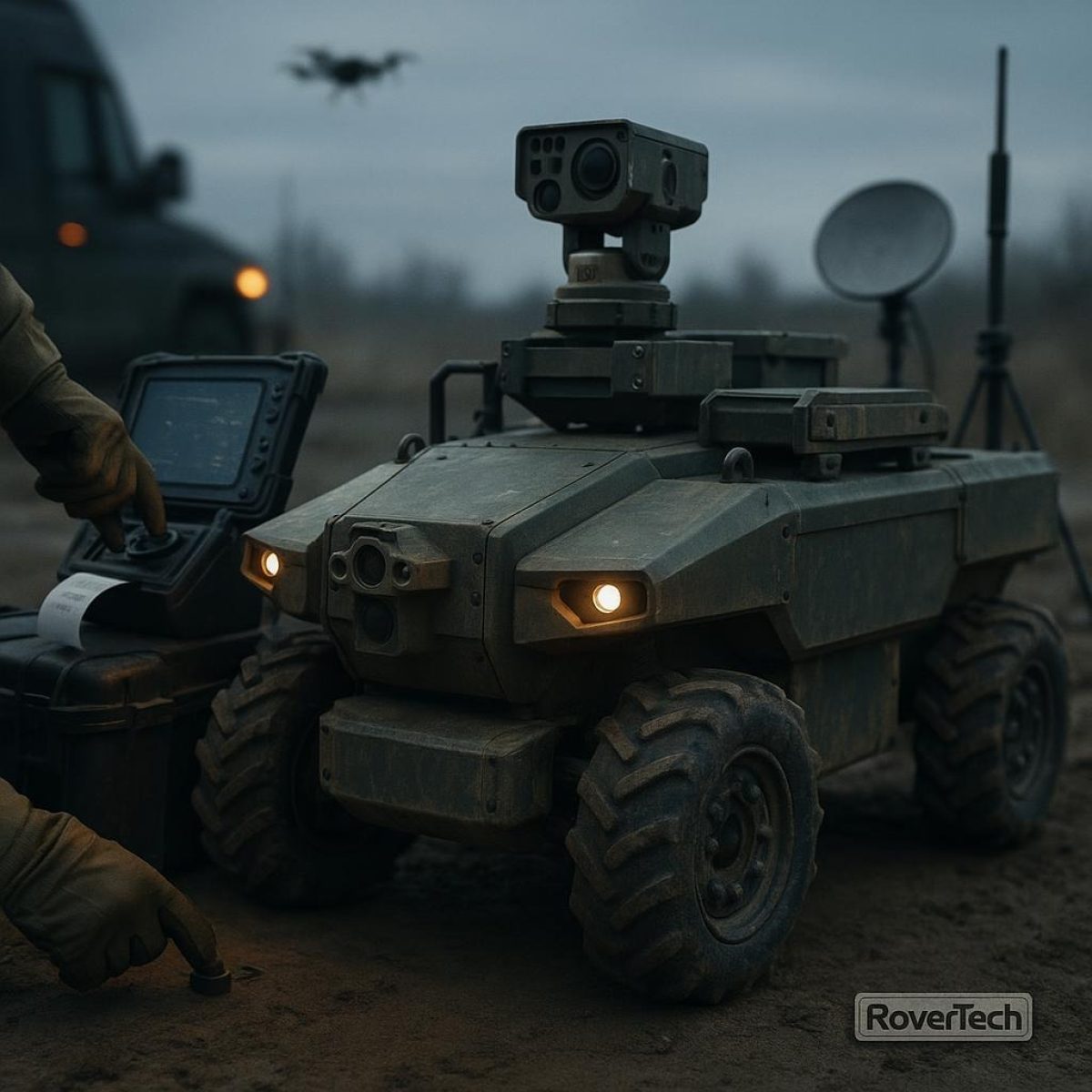
RoverTech’s Zmyi and a presidential order for 50,000 uncrewed ground vehicles make the signal plain: low-cost battlefield robots are no longer an experiment. According to reporting by IEEE Spectrum Robotics, Ukrainian developers and small OEMs have pushed fleets of attritable UGVs into frontline roles alongside long-range FPV drones and commercial satellite comms.
The real issue
The core problem is not that robots work; it is that operational dependence on them is growing faster than the controls around that dependence. Cheap platforms like the Zmyi are designed to be produced and replaced, and they are already completing dozens of missions before failure. That changes the trade-offs commanders make: replace exposed troops and trucks now, not years from now.
That shift creates new, concrete dependencies that teams must manage-operator links, commercial satellite or LTE relays, and modular weapons and sensors. Those pieces are supplied by a mix of startups and off-the-shelf vendors, which speeds adoption but fragments accountability. Decision teams should compare control and sensor stacks and operator interfaces carefully; see the AI Tools Comparison Hub for a starting point on tool choices that matter in ops and testing.
Why this matters now
Two things converged rapidly: operational wins on the frontline and a jump in production scale. Ukraine’s recent procurement order accelerates a volume market for attritable UGVs tied to Starlink/LTE/mesh comms and long-range FPV strike drones. That matters because it brings new, measurable dependencies into everyday combat decisions-who talks to the robot, how long that link lasts under attack, and what happens if comms fail.
For organizations, the practical implications are narrow and urgent. First, units adopting UGVs must treat comms resilience and countermeasure testing as top-line battlefield requirements, not optional features. Second, teams should instrument deployments to produce measurable operational metrics-mission success per platform, mean missions to failure, and the rate of command-link loss-so leaders can judge when robots actually deliver the claimed force-protection benefit.
Arti-Trends read: RoverTech’s example shows AI and robotics often add value quickly, but create dependencies that outpace governance and testing. Measurable metrics and hardened comms are now the operational priorities.
What to watch next
One clear signal will settle this fast: if operational metrics show UGVs reduce exposed personnel casualties while keeping command links reliable, armies will move from pilots to mass buys. If not, expect rapid pushback and tighter rules on deployment.
For the most relevant practical background on this topic, see AI Tools.