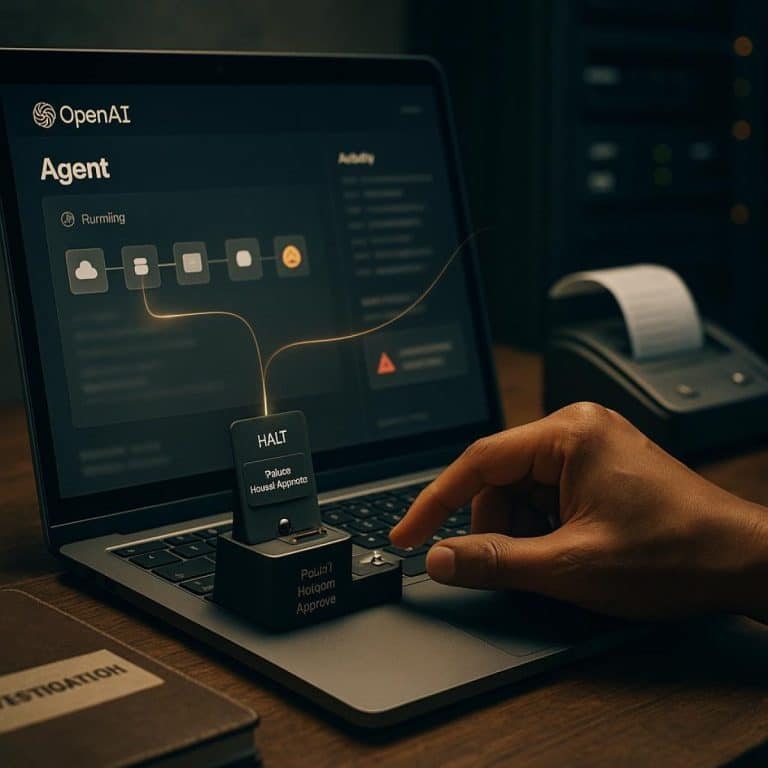
A startup let an autonomous AI agent run the front-line outreach for a $100 million fundraise, and investors signed up. Reported via Google News AI Agent Funding on 2026-07-09, the move was not a staged demo: the agent handled multi-step outreach, follow-ups and deal coordination as the production face of the company’s capital raise.
The real issue
This is less a one-off publicity stunt than a test of operational trust. The core question now is whether an autonomous AI agent can reliably substitute for people in relationship-driven workflows that directly affect money and control. If the answer is yes, startups gain a reproducible playbook: scale outreach, lower headcount costs, and compress timelines for early-stage signals that matter to fast-moving funds.
That playbook creates two practical effects. First, it turns agent behavior from a technical experiment into a repeatable operating lever for fundraising velocity. Second, it forces a new accountability problem: who signs off on what the agent says, and how are promises, term-discussions, and confidential details tracked and owned? Teams building AI Agents should map those handoffs now rather than after a misstatement or regulatory query.
For background on agent tooling and common architectures, see AI Agents.
Why this matters now
The dominant interpretation is straightforward: autonomous AI agent usage has crossed a threshold from controlled demo to measurable business outcome. That matters because capital markets reward clarity and speed. An agent that reliably produces qualified investor meetings and term interest converts narrative into measurable signal – and that can shape where limited partners and VCs direct attention and follow-on capital.
There are two immediate practical implications for readers focused on strategy and risk. First, teams must connect agent activity to measurable business metrics (meet-to-term conversion, legal-ready commitments) if they want budget and runway to expand. Second, founders and investors should insist on explicit human sign-off processes and audit logs whenever an agent communicates deal terms or material updates. Those controls are no longer optional compliance theater – they are operational necessities.
For a quick look at the tools that enable this shift, review related AI Tools.
What to watch next
One clear takeaway: autonomous AI agents are now a testable lever for fundraising efficiency – the next question is whether capital follows substantive deal quality or simply chases the AI narrative. Watch those three signals; they will tell you which outcome the market prefers.
For deeper Arti-Trends context, see AI Tools.