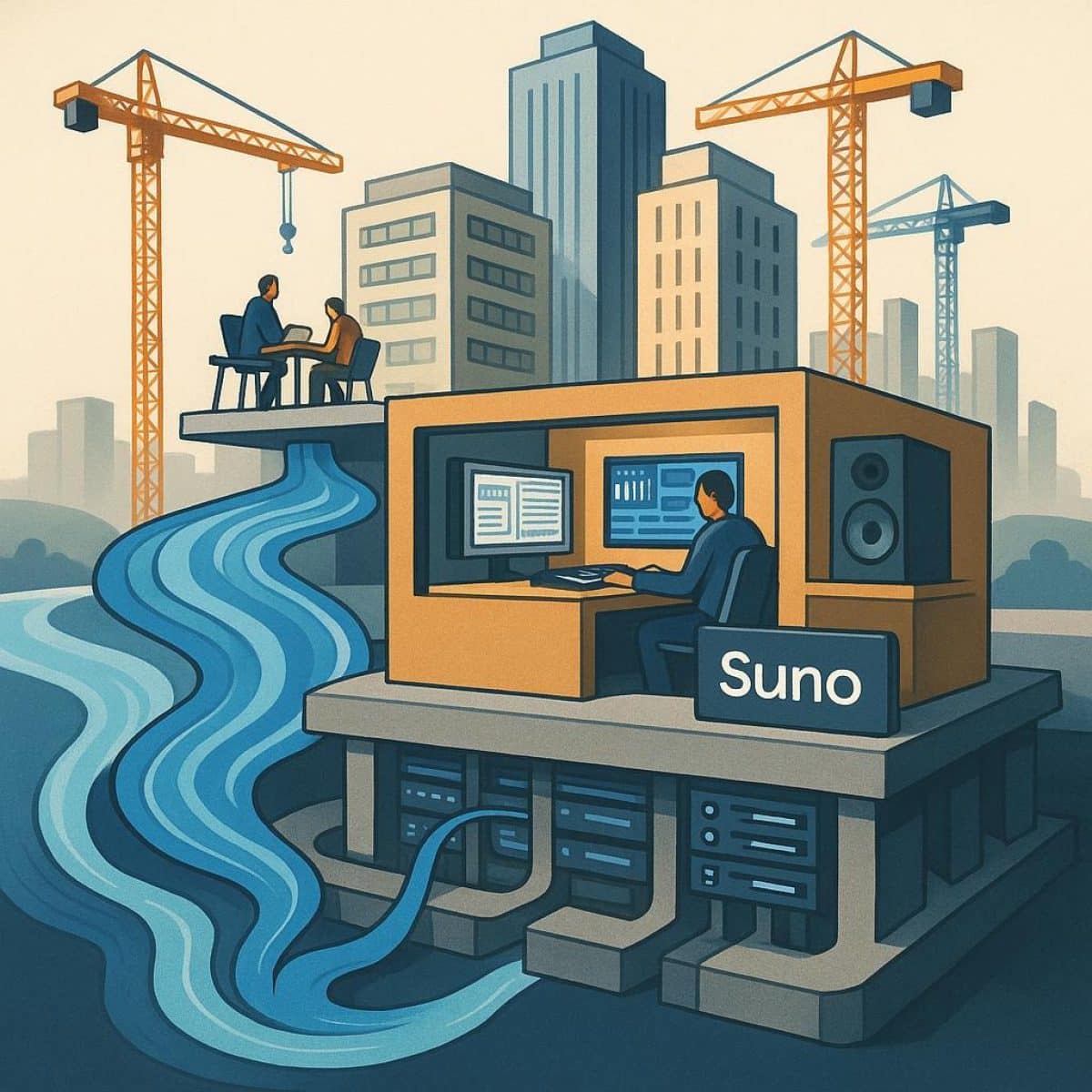
Suno has opened Spark, a paid incubator for unsigned musicians. It offers grants, mentorship, and promotion while also feeding new tracks and creator relationships into Suno’s AI and streaming plans. On the surface it looks like artist support; under the hood it acts as a content pipeline that can improve Suno’s models and give the company exclusive listening inventory.
The real issue
Spark reframes what a creator program can be. Rather than just giving money or a playlist boost, Suno gets early access to songs, stems, and ongoing creator relationships that can be used to train models and power platform features.
The key trade-off is exposure and short-term support in exchange for privileged content access. For artists, Spark promises promotion and funding. For Suno, it provides two clear gains: content that draws listeners and material to improve its audio models. Those gains matter only if Suno can turn attention into steady revenue from subscriptions, streaming, or licensing.
If you build tools or choose partners, pay attention to where creator data will live and who can reuse it. Suno’s approach is a reminder to map data flows and reuse rules; see the AI Stack Builder for architecture choices that clarify reuse and compliance.
Why this matters now for Suno
Timing matters because 2026 has tightened scrutiny on training data and creator rights. Programs that seem generous can quickly become default sources of training material unless their terms clearly limit reuse. That makes the economic question central: which companies can capture attention and then turn it into steady billing or licensing?
Two practical implications follow. First, independent artists should treat incubators as business offers, not pure patronage: check what rights you give up and what you keep before signing. Second, product teams and partners should expect content-first plays to push competitors toward deeper integration of discovery, promotion, and model training-compare platforms on those exact capabilities at the AI Tools Comparison Hub before committing catalogs or creators.
What to watch next
One clear reading: Spark is a probe for whether attention can be turned into durable revenue-watch terms, uptake, and copycats to see if it becomes a lasting content advantage.
For deeper Arti-Trends context, see Home.