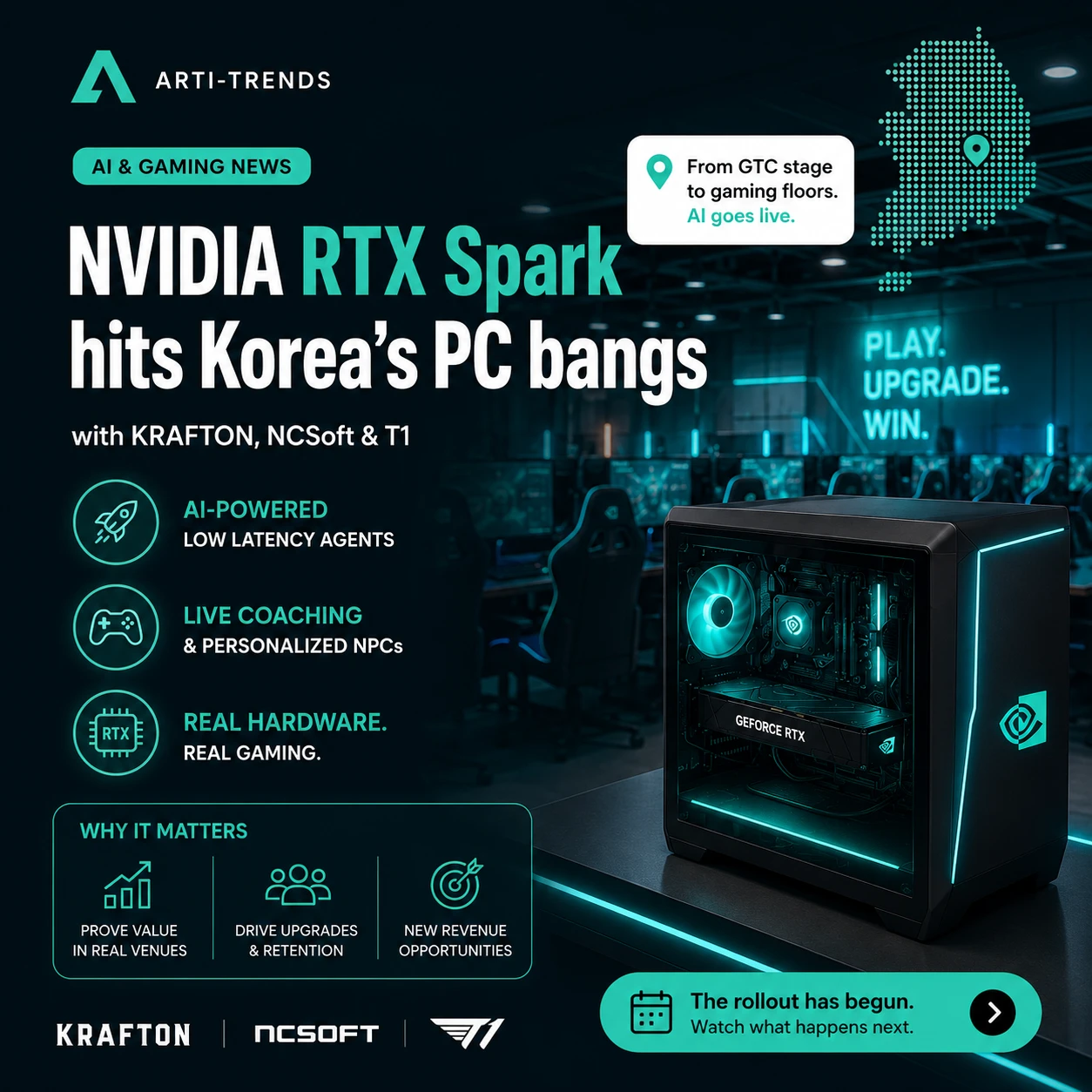
NVIDIA has started installing RTX Spark-capable PCs in South Korea’s PC bangs alongside partners KRAFTON, NCSoft and esports franchise T1, turning a developer-focused superchip announcement into a public consumer showcase. The shift takes RTX Spark out of the GTC floor demo and into crowded gaming rooms where players can try low-latency, agentic features on real hardware. (Source: NVIDIA Blog AI)
The real issue
The core signal is simple: a chip vendor has moved from trade-show hype to public field tests in consumer venues. At GTC Taipei at COMPUTEX NVIDIA introduced RTX Spark as a desktop-class superchip; this Korea push turns that demo into hands-on trials inside popular gaming venues and partner-driven game tests. The step matters because it reframes where high-end AI silicon is marketed – from datacenter buyers and developers to everyday players and venue owners.
In practice, this matters for how vendors prove value. Hardware that once needed a cloud backend can now be shown running in a room full of paying users, which shortens the feedback loop on features, monetization, and operational costs. That also changes the sales pitch: platform and game companies can sell experiential upgrades (new agent-powered modes, live coaching, personalized NPCs) as reasons to upgrade PCs or pay for premium sessions.
NVIDIA’s timeline traces back to the GTC Taipei / COMPUTEX announcement, and the Korea rollout is explicitly partner-led in marketing and gameplay. If developers move quickly to ship Spark-optimized features, the hardware will shift from an R&D novelty into a purchase driver for PC builders, venue owners and publishers. Early SDK and tooling access will be decisive – the ease of porting features into live games will determine whether PC bangs become permanent testbeds or one-off marketing events. For teams building or integrating these features, standard developer workflows and runtime tools will matter; resources like AI Stack Builder show how toolchains shape adoption.
Why this matters now
The dominant editorial question: can AI usage prove measurable business value before budgets tighten? This Korea push gives a quick answer mechanism. Public, pay-for-play trials generate direct signals: foot traffic, session length, incremental spend on upgrades or in-game items, and developer telemetry on feature engagement. Those are the kinds of metrics finance teams want when weighing new hardware or partnership deals.
Two practical implications follow. First, product and ops teams will have to instrument Spark features with clear revenue or retention metrics from day one. Prototypes that only impress in demos won’t move buying decisions. Second, suppliers and venues will need to reconcile power, cooling and cost-per-seat economics quickly – a flashy feature isn’t enough if it raises venue bills more than it drives revenue.
What to watch next
Watch those signals for a clear read on whether RTX Spark becomes a revenue-driving product or remains a high-profile demo.