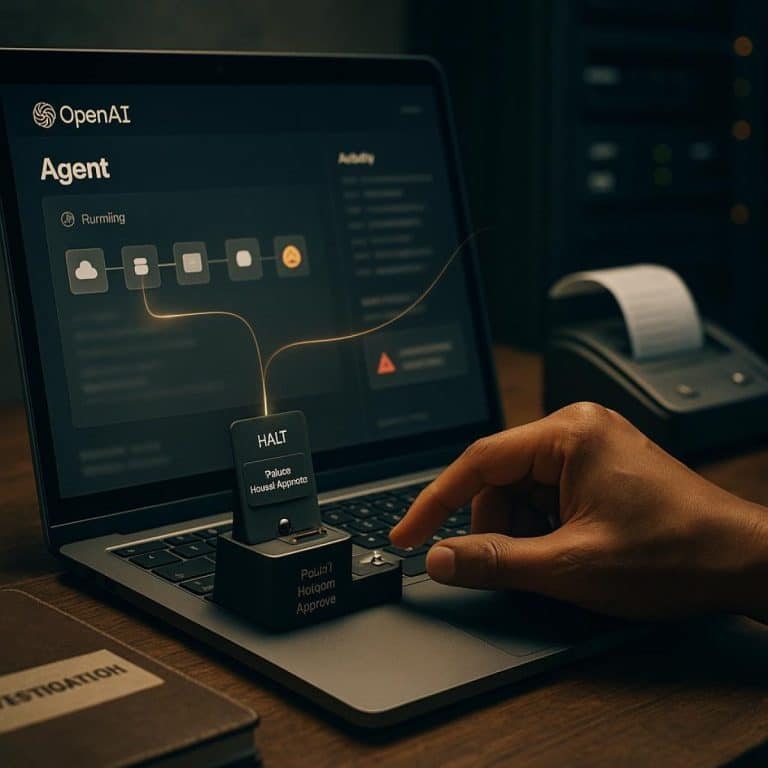
Anthropic released Claude Opus 4.8, a version it says is trained to be more “honest.” The company focused on getting the model to refuse unsupported claims, signal uncertainty, and cut back on confidently wrong answers. Anthropic frames this as a behavioral safety update-less about new knowledge or reasoning power and more about how the model behaves in risky situations.
The real issue
The Verge AI reported that Claude Opus 4.8 combines better confidence estimates, refusal behavior for high-risk prompts, and clearer uncertainty signals like saying “I don’t know.” Those are practical steps to reduce hallucinations and make outputs easier to audit.
This is a product shift: Anthropic is selling behavioral guarantees rather than raw capability improvements. That matters because some customers choose a model based on how it states limits and when it declines a dangerous or unsupported request.
A model that openly admits limits can lower the cost of checking outputs and reduce reputational risk for teams that handle sensitive information. But it also creates a new need: consistent tests and metrics to verify that a model’s honesty claims hold up in real-world use.
Product managers and developers building information-sensitive apps will feel this first. They now need to ask not only about accuracy and latency, but about how the assistant indicates uncertainty and handles risky prompts. For more context on assistant behavior and integration patterns, Arti-Trends tracks tools in an AI tools hub.
Why this matters now
Regulators and customers are increasingly intolerant of models that present falsehoods as fact. A model that signals limits could reduce the operational and reputational costs of deploying AI in fields like healthcare, finance, and law, where wrong answers carry real consequences.
Two concrete effects are already visible. First, behavioral safety may become a buying reason: customers could prefer models that lower the burden of verification and compliance work. Second, vendors that keep competing on confident-but-unverified outputs risk losing trust and enterprise deals.
Still, honesty is a partial fix. Models can be tuned to say “I don’t know” and yet still reveal wrong facts under pressure, or be prompted into confident mistakes by clever adversaries. Independent testing and validation remain essential to make honesty claims meaningful.
What to watch next
Source: The Verge AI.