Intro
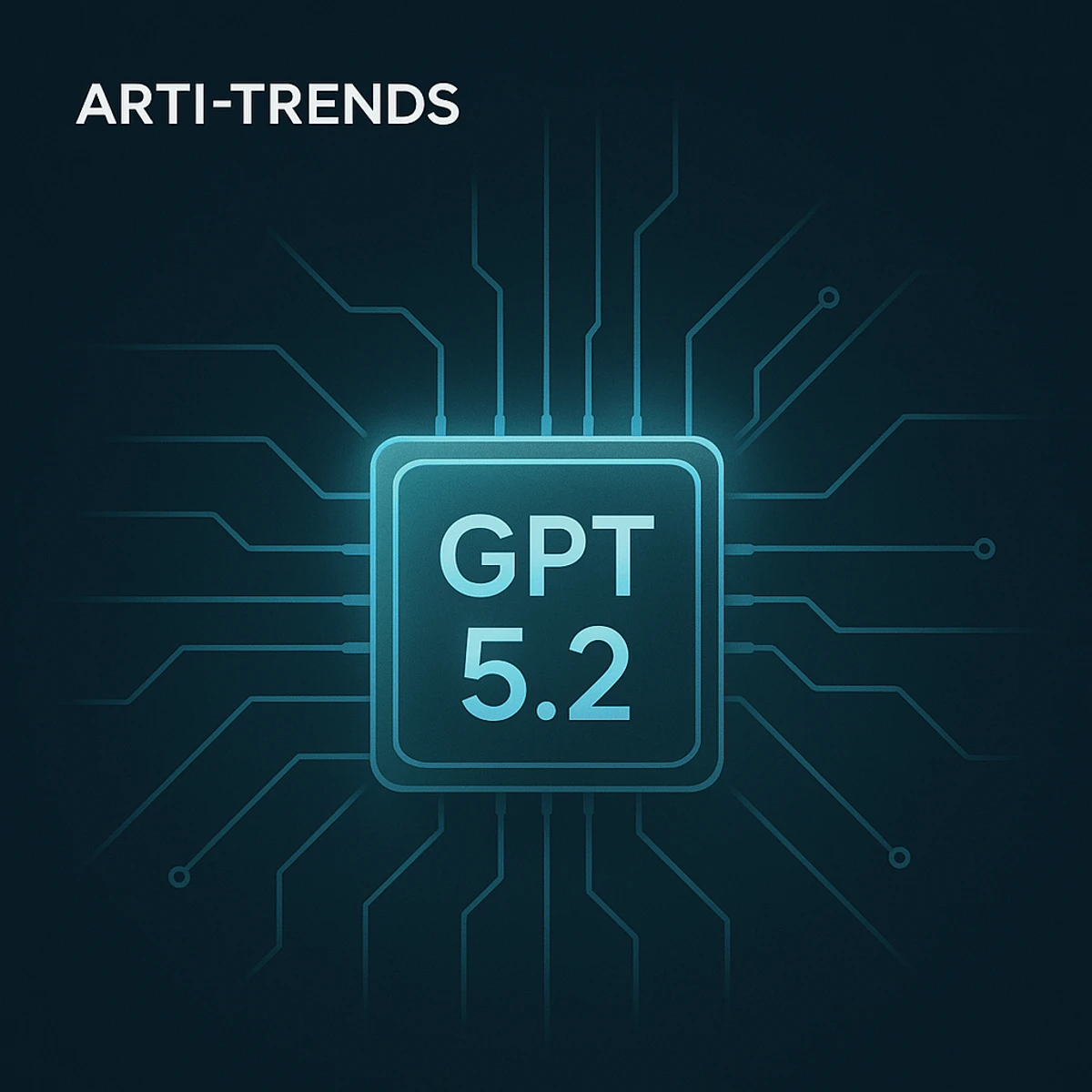
OpenAI has launched GPT-5.2, positioning it as its most capable AI model to date for professional and productivity-driven use cases. The release focuses on stronger performance in coding, long-context reasoning, tool usage and visual input — areas where AI is increasingly expected to function as a true work companion rather than a conversational novelty.
The launch also sharpens the competitive line with Google’s Gemini models, which target similar ground across knowledge work, creative tasks and enterprise workflows. For professionals, developers and businesses, GPT-5.2 marks another step toward AI becoming a core layer of modern work.
Key Takeaways
- OpenAI introduces GPT-5.2, aimed squarely at professional workflows.
- Major improvements in code generation, long-context handling and tool use.
- Better interpretation of visual inputs such as charts, screenshots and documents.
- Designed for deeper integration into productivity and enterprise environments.
- Intensifies competition with Google’s Gemini across knowledge-work scenarios.
- Signals a shift from “chat AI” to workflow-centric AI systems.
Explore More
Looking to go deeper? Explore Arti-Trends’ core knowledge hubs for technical insights, practical tools, real-world applications and strategic AI analysis:
- AI Guides Hub — foundational explanations & deep technical insights
- AI Tools Hub — hands-on model comparisons & evaluations
- AI News Hub — rapid updates on global AI developments
- AI Investing Hub — analysis of AI companies, strategy and market impact
These hubs offer wider context behind the governance, competition rules and digital infrastructure shaping AI adoption.
Recent Developments
According to OpenAI, GPT-5.2 builds on earlier versions by improving reliability in complex, multi-step tasks. The model performs more consistently when working with large documents, extended conversations or multi-file codebases — a known pain point for many AI users.
The model also shows stronger performance when using external tools, such as browsing, data analysis or structured workflows. This makes GPT-5.2 better suited for real-world professional environments where AI must interact with software systems rather than operate in isolation.
Visual understanding has also been improved, enabling the model to reason more effectively over images, diagrams and structured visuals — a key capability as AI assistants move beyond text-only tasks.
How GPT-5.2 Aims to Boost Professional Productivity
GPT-5.2 is designed around a simple premise: AI should reduce friction in real work, not just generate plausible answers. For professionals, that translates into:
- More accurate code suggestions across longer projects
- Better reasoning across documents, spreadsheets and reports
- Improved follow-through on multi-step instructions
- Fewer breakdowns when context becomes complex or lengthy
This positions GPT-5.2 as less of a creative toy and more of a reliable productivity engine — especially for knowledge workers juggling multiple inputs at once.
GPT-5.2 vs Gemini: Who Wins the AI Assistant Race?
The competition between OpenAI and Google is no longer about who has the smartest chatbot. It’s about who owns the AI layer of work.
- OpenAI (GPT-5.2) emphasizes flexibility, developer adoption and task execution across tools.
- Google (Gemini) focuses on deep integration with its ecosystem, especially Workspace and search.
For users, the distinction may come down to context: GPT-5.2 appeals to those who want a powerful, general-purpose AI assistant that adapts across tools, while Gemini may appeal to teams already embedded in Google’s productivity stack.
The race is still open — and likely to accelerate as both platforms push further into enterprise and agentic workflows.
Practical Implications
For Developers
- Stronger foundations for building AI-powered productivity tools.
- Improved handling of long contexts and mixed inputs.
- More reliable AI behavior in real application workflows.
For Businesses
- AI assistants that can support real operational tasks, not just ideation.
- Greater confidence in deploying AI across teams and departments.
- Increased pressure to evaluate AI platforms based on workflow performance, not demos.
For Professionals
- Faster execution of complex tasks involving documents, data and code.
- AI that stays coherent across entire projects, not just single prompts.
- A gradual shift toward AI as a daily work companion.
What Happens Next
GPT-5.2 is unlikely to remain unchallenged for long. Google is expected to continue expanding Gemini’s capabilities, while OpenAI pushes deeper into enterprise integrations and agent-based workflows.
The next phase of competition will likely focus on reliability, cost efficiency and real-world productivity gains — not just benchmark scores. For professionals, the winners will be the models that quietly save time, reduce errors and integrate seamlessly into daily work.