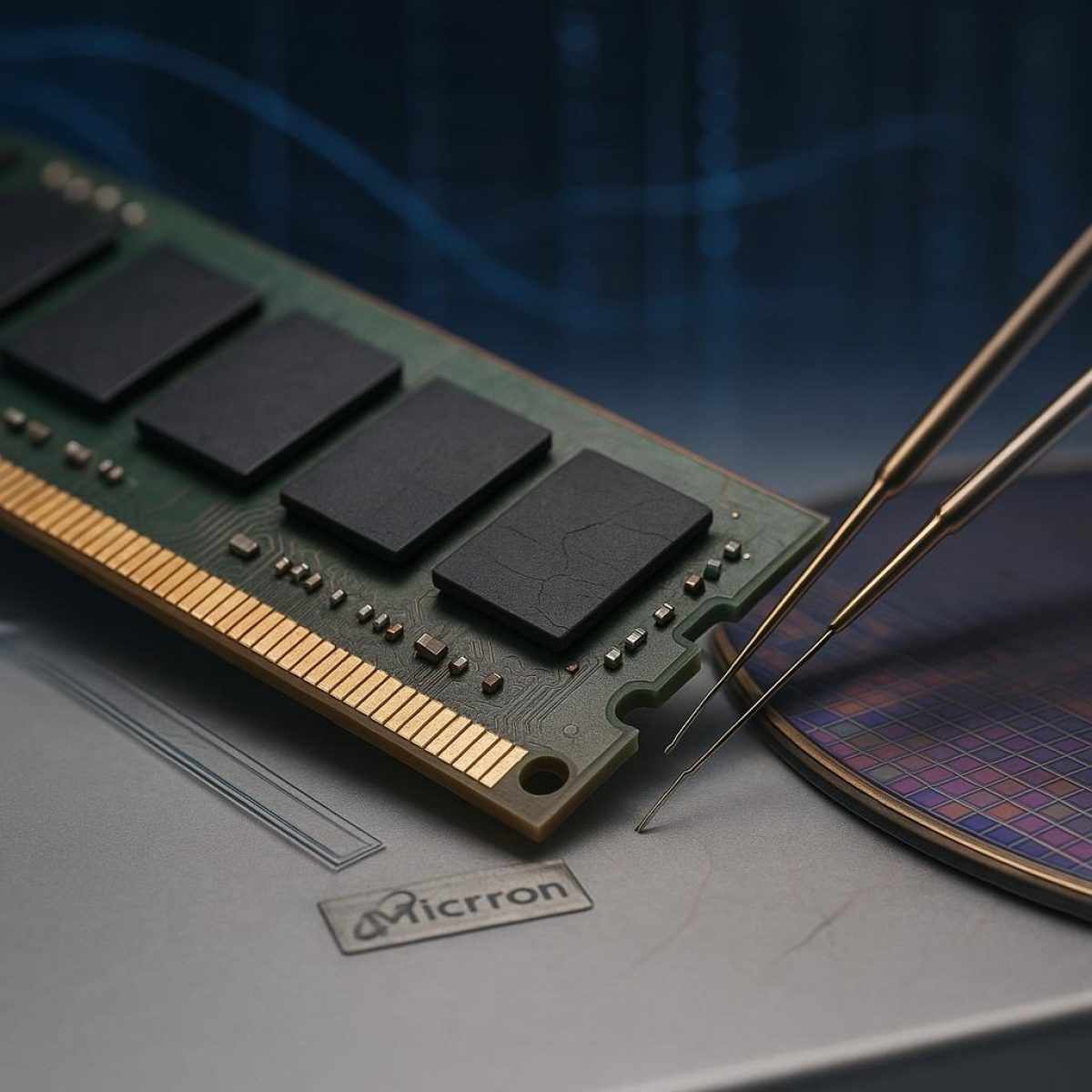
Micron Technology (MU) shares dropped roughly 5% as broader tech weakness spilled into semiconductor names, a move CNBC and market feeds flagged on Friday. The decline is more than a single-stock wobble: for investors tracking AI infrastructure, a pullback at Micron can signal fresh questions about DRAM and NAND demand just as AI spending expectations are being re-priced.
The real issue
The price move at Micron matters because memory revenue is an early indicator of datacenter hardware cycles. If memory buyers – primarily hyperscalers and cloud providers – slow purchases or extract better prices, DRAM and NAND sellers see revenue and margin pressure quickly. That can compress near-term earnings for suppliers and reduce the capitalization available for future capacity expansion.
Two investor behaviors explain the slide. First, broad profit-taking in large-cap tech amplifies moves in semiconductor names that had run up on the AI narrative. Second, traders are parsing signals that may point to weakening spot memory prices or elevated inventories. Either case undercuts the simple story that AI demand will automatically sustain high growth in memory makers.
Why this matters now
The core takeaway: Micron’s drop is a market signal about whether AI spending is translating into durable revenue. For investors and teams allocating capital, this is not just noise – it tests whether AI usage is being matched by measurable business value and predictable hardware demand.
Two practical implications follow. First, portfolio managers should separate narrative-driven winners from firms showing real revenue traction in AI hardware. For a quick primer on the investing angle and where memory exposure fits into broader allocation decisions, see What Is AI Investing? A Complete Guide to Stocks, ETFs & Crypto (2026).
IT and procurement teams at enterprises should treat any vendor price volatility as a prompt to link AI projects to near-term cost outcomes. As budgets tighten, teams that can show ROI will keep funding; those that can’t may see headcount or project cuts.
What to watch next
Watch Micron’s own guidance next – it will be the clearest near-term signal of whether this is a liquidity-driven dip or the start of a demand reset that matters for AI hardware markets.
For deeper Arti-Trends context, see Home.