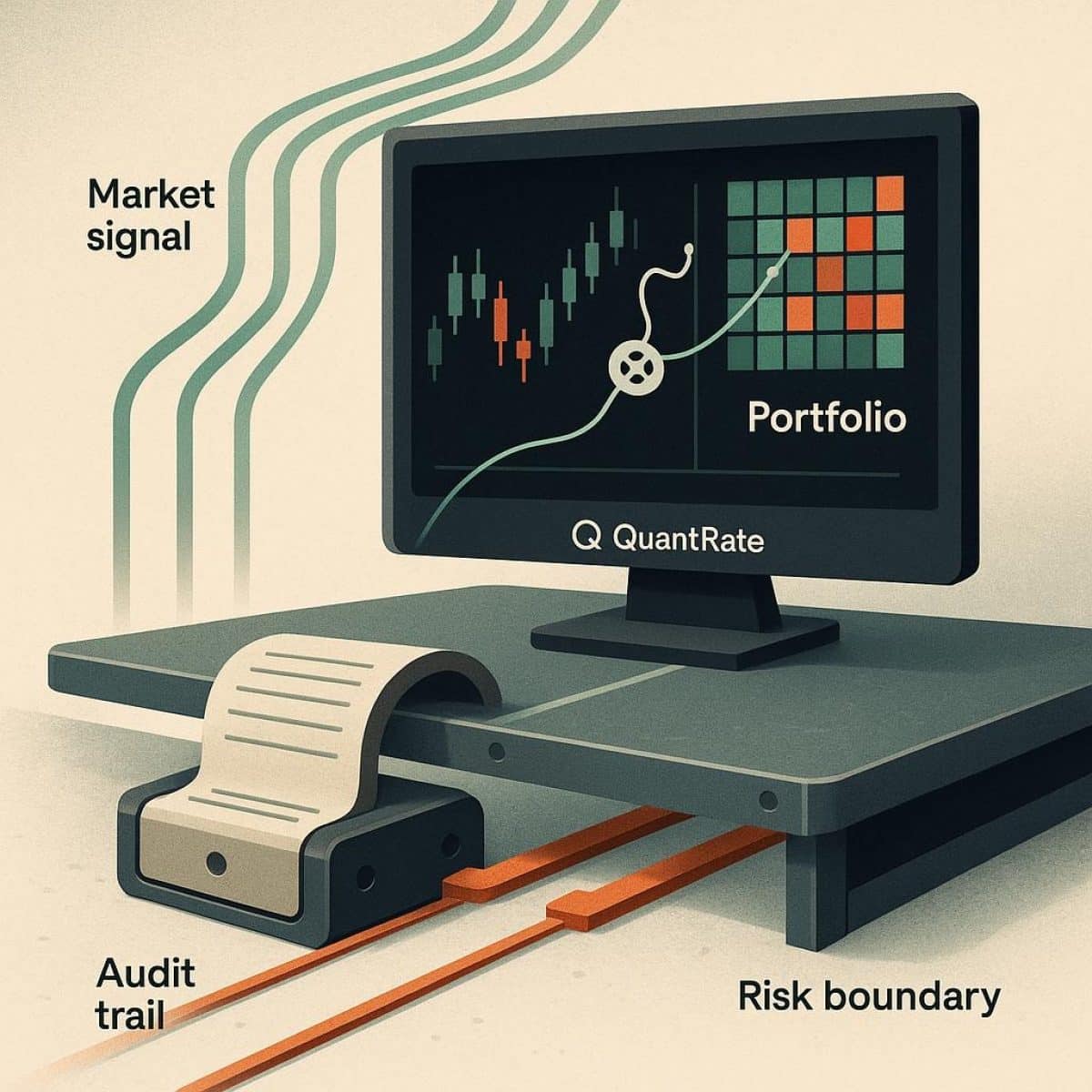
QuantRate says it has moved beyond human-supervised quant models to a next-generation trading product: an autonomous AI agent that learns continuously in production, sends lower-latency execution signals, and rebalances portfolios without hands-on intervention. The launch, reported by Google News AI Trading Bots, matters less as a single product update and more as a signal: AI-driven trading is shifting from model-assist tools to self-updating portfolio agents.
The real issue
The core question is accountability. Models that keep changing in live trading alter who controls a strategy and how you prove it is safe. Traditional controls assume models are fixed between reviews. They rely on frozen test sets, scheduled audits, and human sign-off. An agent that updates itself breaks those assumptions.
That matters for three practical reasons. First, it becomes harder to explain why a trade happened after the fact if the decision logic has shifted since deployment. Second, stopping a bad behavior is no longer a matter of pulling one version off the shelf – you must interrupt a system that keeps adapting. Third, auditors and compliance teams will need different evidence: continuous logs and live audit trails instead of periodic reports.
Why this matters now
Markets have become faster and more fragmented. More retail flow, fractionalized assets, and sudden bursts of volatility raise the value of systems that react quickly and adapt in real time. That makes autonomous agents commercially attractive to funds and large investors looking for scalable edges.
Practical implication 1: Buyers of these strategies – fund allocators and due-diligence teams – should demand live, verifiable performance records and trade-level audit trails, not only backtests or marketing claims. If a strategy really learns on the fly, you need continuous evidence it behaves as advertised.
Practical implication 2: The providers of infrastructure – clouds, co-location services, and real-time data feeds – stand to capture more revenue. Faster networks, lower-latency routing, and immediate data can make live learning more effective, and that shifts where margin collects in the stack.
What to watch next
QuantRate’s announcement signals where capital and technical effort are headed. The decisive next sign will be transparent, audited performance – that will tell you whether money follows real returns or just the narrative.