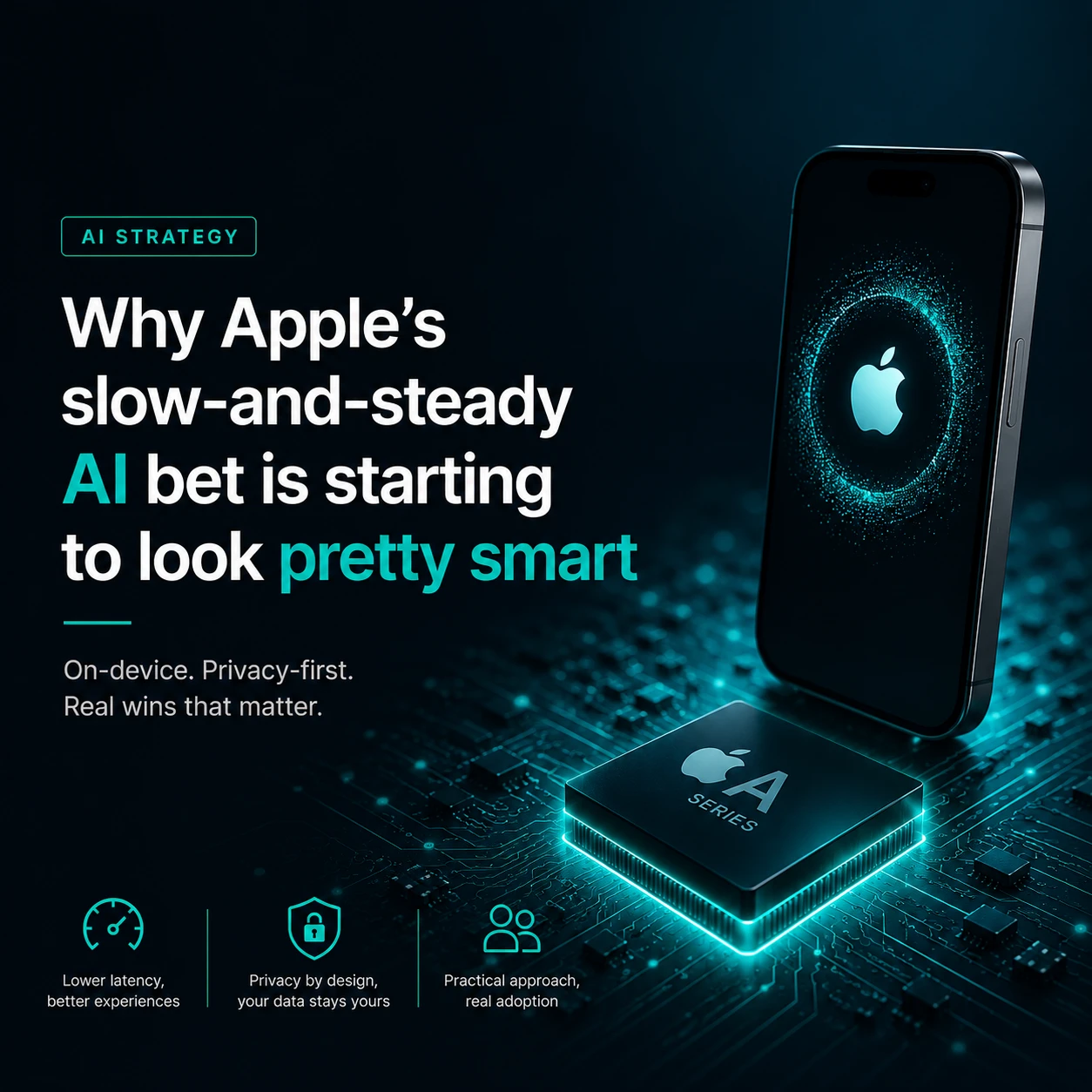
Apple’s slow-and-steady AI strategy is starting to deliver visible wins. Recent rollouts and demos show its privacy-first, on-device approach is moving past experiments and into everyday user value.
This matters because Apple’s play-tight hardware-software integration, cautious releases and clear privacy controls-looks very different from the cloud-first, fast-iterate approach many AI leaders use.
The real issue
The core signal isn’t that Apple suddenly runs the largest models. It’s that small, reliable changes to daily workflows are easier to ship and easier for people to adopt when the heavy lifting happens on the device and Apple controls the whole stack.
Processing on-device cuts round-trip delay and keeps more user data local by design. Those are practical wins: lower latency makes assistant features feel quicker and less disruptive, and tighter privacy controls persuade cautious users and some businesses to try AI tools.
Because Apple controls hardware and software, its teams can tune models to specific chips and power limits rather than treating all devices like generic cloud clients. That tuning can improve battery life, responsiveness and predictability-qualities many people notice right away.
This path doesn’t remove risks like hallucinations or data misuse, but it changes the trade-offs. Fewer cloud calls mean smaller exposed datasets and clearer user controls. For a company that sells devices and services, those trade-offs can build trust and support recurring revenue.
For background on Apple’s recent moves and how they fit into product plans, see our Apple page for related coverage: Apple.
Why this matters now
Dominant interpretation: the AI story is shifting from headline demos to measurable business value. The real test is whether these features become part of routine work or stay impressive one-offs.
Two practical implications for teams focused on outcomes:
- Measure real use, not just launches. Track how often features are used, whether they help finish tasks faster, and if they lower error rates. Usage without measurable gains will be an easy target when budgets tighten.
- Developers and toolmakers should prioritize predictable, low-latency APIs and clear privacy settings. Building for on-device models means rethinking testing, measurement and release practices-see developer resources in our AI tools hub.
Reader takeaway: adoption, not announcements, will decide whether Apple’s patient approach turns into real value.
What to watch next
If daily active use rises and independent tests show lower errors or latency, Apple’s cautious strategy will have shifted from defense to a practical product advantage.