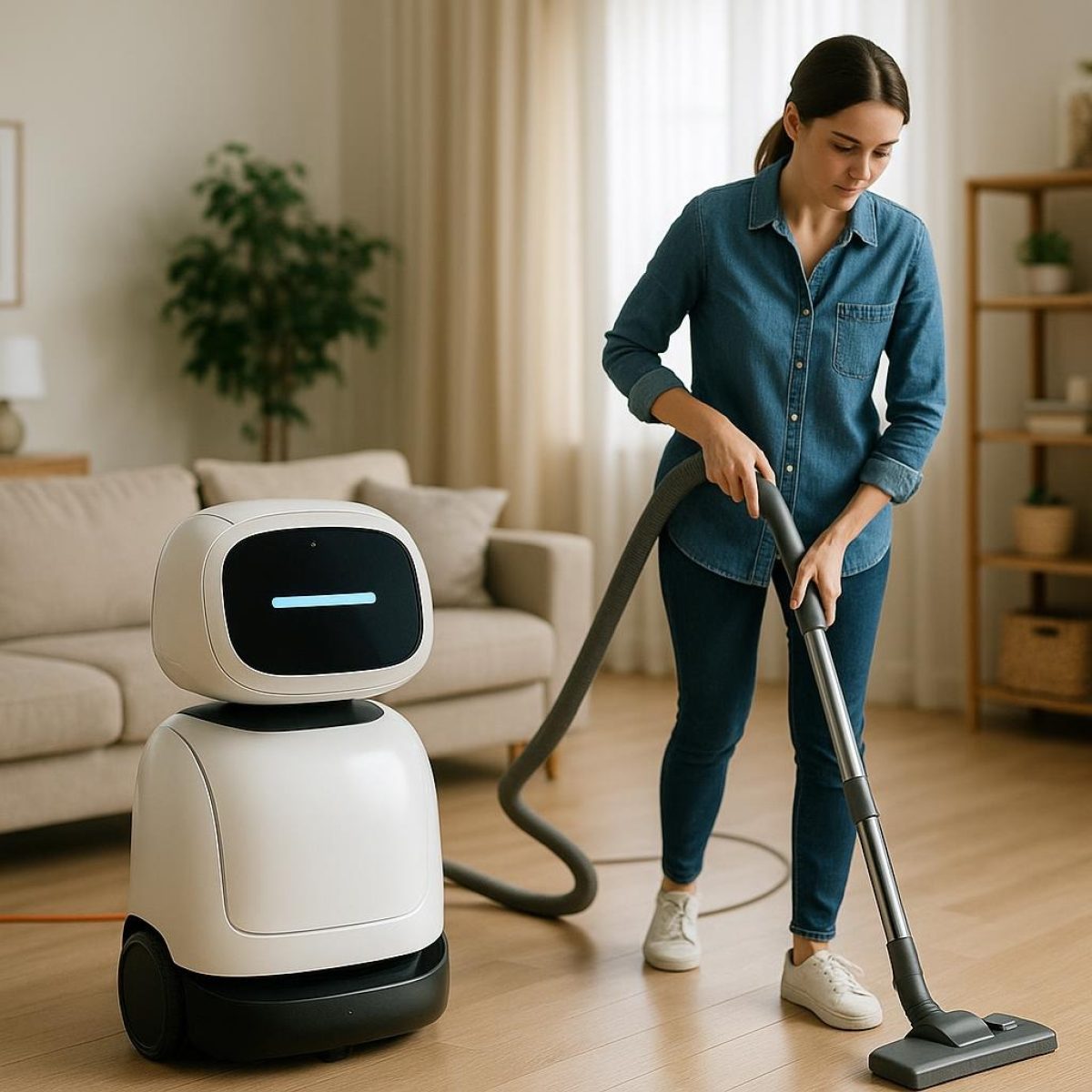
Shift is offering free home cleaning in return for recorded footage of cleaners, and it matters because that video is exactly the training data robotics teams need. The Verge AI reported that Shift announced the offer on social media: cleaners would be filmed while they tidy, vacuum, and perform common household tasks, and that footage would be used to train home robots.
The real issue
The concrete change is simple: a startup is trading a consumer service – free cleaning – for real-world video of people doing embodied tasks. That footage is valuable because modern imitation- and video-based learning methods can extract action demonstrations (where and how people reach, move objects, fold towels) and turn them into policies robots can imitate.
For robotics teams, high-quality, diverse in-home footage is expensive to manufacture at scale. Shift’s model funnels those demonstrations out of ordinary households at low cost. For workers and residents, the trade raises immediate questions about consent, data retention, and worker protections: who controls the recordings, who can use them, and whether cleaners are compensated fairly for becoming a data source.
Why this matters now
Two short effects make this a near-term business and policy signal. First, training data for embodied AI is a bottleneck; offers that cheaply capture real-world behavior speed model progress and concentrate value in firms that own the footage. Second, firms under financial pressure to cut costly field trials will test service-for-data models as a low-cost alternative to traditional data collection.
Investors will watch how this changes capital flow into robotics startups and related public companies. Early access to proprietary, labeled demonstration data can shorten development timelines and raise valuation multiples for companies that control it – a dynamic investors track in our AI stocks hub.
What to watch next
Source: The Verge AI. This story is a market signal: Shift may be one company, but the approach reveals where capital and operational risk are concentrating for embodied AI.