
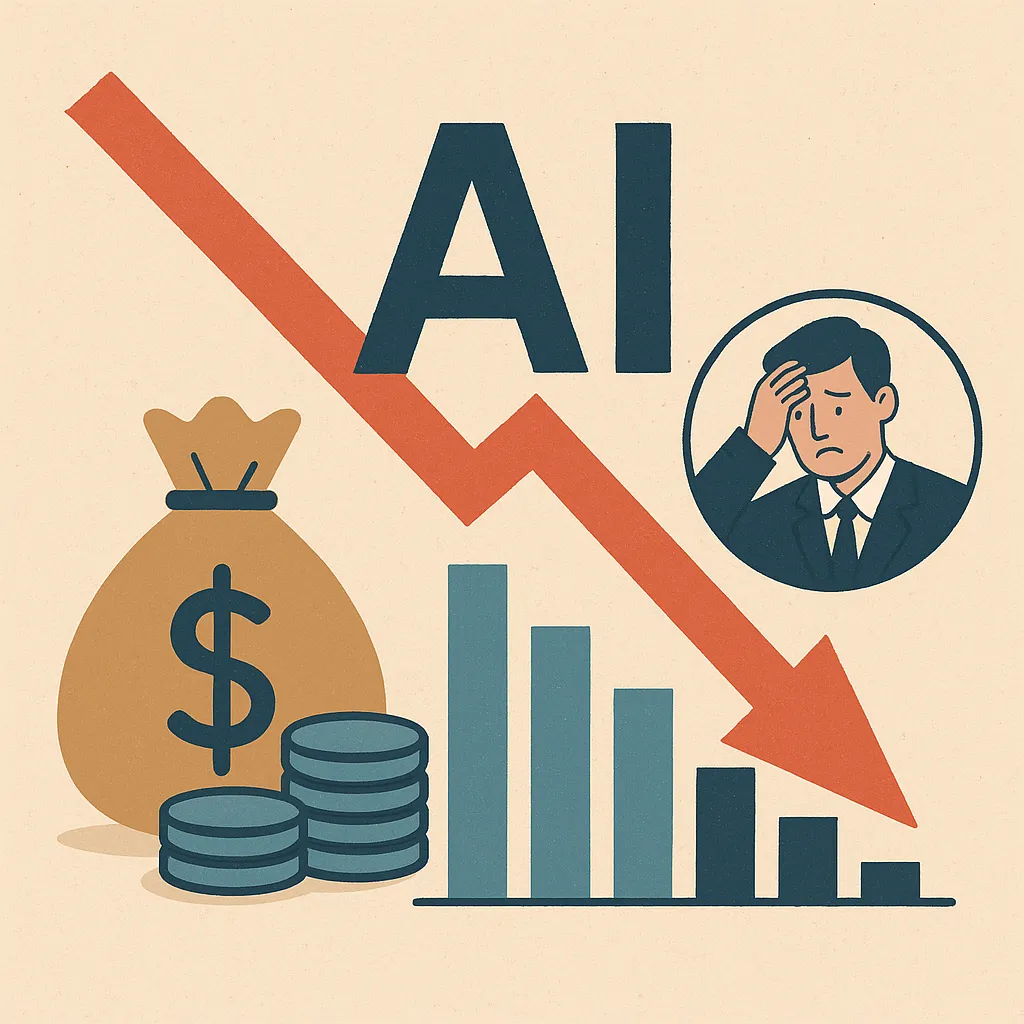
The explosive, hype-driven phase of AI investment is cooling as companies across the U.S. and Europe begin prioritizing measurable results over ambitious forecasts. New industry analysis shows that organizations are tightening AI budgets, reassessing deployment strategies, and demanding clearer returns from their technology spending.
According to Deloitte’s latest findings, the AI sector is entering a more disciplined phase. While adoption continues to rise, the pace of investment growth is slowing as businesses confront the realities of scaling AI in production: high cloud costs, infrastructure bottlenecks, data readiness issues, and the need for operational oversight.
From experimentation to evaluation
Throughout 2023 and 2024, enterprises poured money into generative AI pilots — often launching tools faster than they could measure their effectiveness. Many of these early projects delivered impressive prototypes, but failed to translate into sustained performance gains.
By early 2025, leadership teams began asking tougher questions:
- What processes are actually improving?
- Are we reducing workload or simply adding another tool?
- Do these models scale without crippling compute bills?
- Where can we quantify ROI — and where are we overinvesting?
This shift has led to a more cautious, strategic approach to AI spending.
Rising costs and shrinking margins
A major factor behind the slowdown is cost pressure. Training and deploying large models requires significant compute power — and the supporting infrastructure remains expensive. GPU shortages, energy-intensive data centers, and dependency on cloud inference have forced companies to rethink their long-term AI budgets.
Analysts note that even industry leaders are seeing margins tighten as AI workloads scale. Companies are now turning their attention to model efficiency, on-device inference, and workflow optimization to offset costs.
ROI is real — but less dramatic
Despite the cooling momentum, AI is still delivering measurable value across sectors. Early adopters are seeing improvements in:
- compliance automation
- supply chain forecasting
- customer support augmentation
- software development workflows
However, the gains tend to be incremental, not transformational. AI is proving powerful — just not in the overnight, organization-wide way hype cycles suggested.
A necessary stabilization phase
Experts emphasize that the slowdown is not a sign of decline — but a sign of maturity. The AI market is shifting from a goldrush to a structured growth phase, where success depends less on ambitious predictions and more on operational excellence.
Analysts expect a second wave of AI adoption later in 2025 driven by:
- more efficient model architectures
- stronger governance frameworks
- regional regulations providing clearer guidance
- advances in edge and on-device AI
- more sustainable compute solutions
The bottom line
AI is not retreating. It’s stabilizing.
As companies move from experimentation to execution, the focus is shifting toward real-world performance, cost efficiency, and long-term impact. The turbulence seen in early 2025 is simply the sector’s transition from hype-driven excitement to a more grounded, measurable phase of innovation.
Read More on AI Investing
If you found this article valuable, you may also enjoy these related insights:
- AI Stocks Slide as Investors Brace for a Potential Bubble Burst
A sharp look at why AI-linked equities faced sudden volatility and what this means for market sentiment. - Best AI ETFs to Invest in 2026
Explore the top AI-focused ETFs expected to outperform as the sector matures. - AI in Healthcare Investing: How Artificial Intelligence Is Transforming Medicine and Markets
Discover how AI is reshaping diagnostics, drug development, and healthcare investing opportunities. - AbCellera AI Stock: The AI-Powered Biotech Redefining Drug Discovery
A deep dive into one of the most innovative biotech firms using AI at the core of drug discovery. - Investing in AI Startups: How to Spot the Next Big Thing in Artificial Intelligence
Learn how to evaluate upcoming AI startups and identify the real disruptors in the next wave of innovation.