
Why this matters
Artificial intelligence is no longer debated only in boardrooms, labs, or investor calls — it is becoming a front-line political issue. When Bernie Sanders describes AI as “the most consequential technology in human history” and calls for a moratorium on new data centers, the discussion shifts decisively from innovation to governance.
This matters because AI’s next phase is not just about models and products, but about infrastructure, energy, labor, and public trust. Political scrutiny is now catching up with technical progress — a dynamic central to AI regulation and governance, which will shape how fast, how widely, and under what conditions AI can scale.
Key Takeaways
- Bernie Sanders calls AI the most consequential technology ever developed.
- He warns about AI’s impact on jobs, inequality, and democratic control.
- Sanders proposes a moratorium on new AI data centers.
- The comments intensify the political debate around AI regulation and infrastructure.
- Data centers and compute scale are becoming central to AI policy discussions.
Sanders’ Warning and the Data Center Question
According to reporting by The Guardian, Sanders argues that unchecked AI expansion risks concentrating power, accelerating job displacement, and amplifying the societal risks of large-scale AI. His proposed pause on new data centers reflects growing concern over AI infrastructure and data centers, including energy use, land requirements, and long-term scalability.
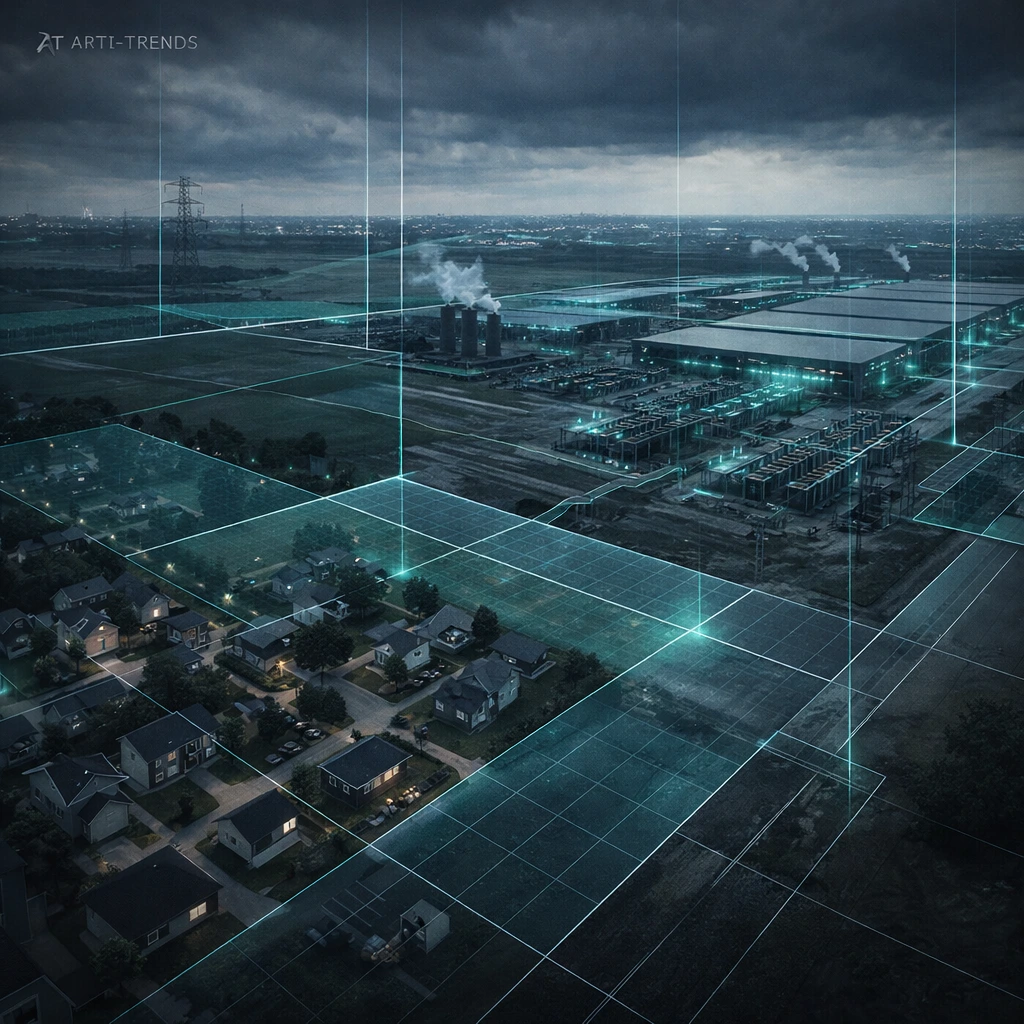
Unlike abstract discussions about algorithms, data centers make AI tangible. They consume electricity, reshape local economies, and anchor AI’s growth in real-world infrastructure decisions. By targeting this layer, Sanders is effectively challenging the assumption that AI scale is an unquestioned public good.
From AI Innovation to AI Infrastructure Politics
For much of the past decade, technology policy focused on platforms and content moderation. AI shifts that focus toward compute, energy, and capital intensity.
As explored across AI infrastructure debates, modern AI systems require:
- massive data centers
- specialized chips
- long-term energy commitments
This makes AI growth inseparable from public infrastructure planning. Sanders’ remarks reflect a broader realization: AI is no longer “just software.”
Strategic Context: Regulation Meets Scale
Why Data Centers Are a Political Flashpoint
A moratorium proposal is unlikely to pass in its current form, but it signals where political pressure is building. Data centers sit at the intersection of:
- climate policy
- national competitiveness
- labor displacement
- corporate concentration
For policymakers, slowing infrastructure growth becomes a way to regain leverage over an industry moving faster than regulatory frameworks.
For AI companies, this introduces a new category of risk: political constraints on scale, not just technical limits.
Industry and Market Implications
For AI Companies
- Infrastructure expansion may face local and federal scrutiny.
- Energy sourcing and transparency will matter more.
- Public perception could influence permitting and investment timelines.
For Enterprises
- AI deployment costs could become less predictable.
- Regulatory delays may affect availability of large-scale AI services.
- Governance questions move closer to procurement decisions.
For Investors
- Political risk is becoming part of AI valuation.
- Infrastructure-heavy strategies may face longer approval cycles.
- AI growth narratives may fragment by region.
A Broader Shift in the AI Narrative
Sanders’ comments highlight a turning point: AI is transitioning from a technological race to a societal negotiation. The debate is no longer only about what AI can do, but about who controls it, who benefits, and who bears the cost.
This mirrors earlier shifts seen with industrialization, energy grids, and telecommunications — technologies that began as innovations and evolved into regulated infrastructure.
What Happens Next
While a full moratorium is improbable, the political signal is clear. Expect:
- increased scrutiny of AI infrastructure projects
- stronger links between AI policy and climate policy
- louder public debate around AI’s social impact
AI’s future will not be decided by engineers alone. Legislators, communities, and voters are now entering the conversation — and that will shape the next phase of AI adoption as much as any model release.
At Arti-Trends, we track these moments closely, because they reveal how AI transitions from innovation to institution.
Source
The Guardian