
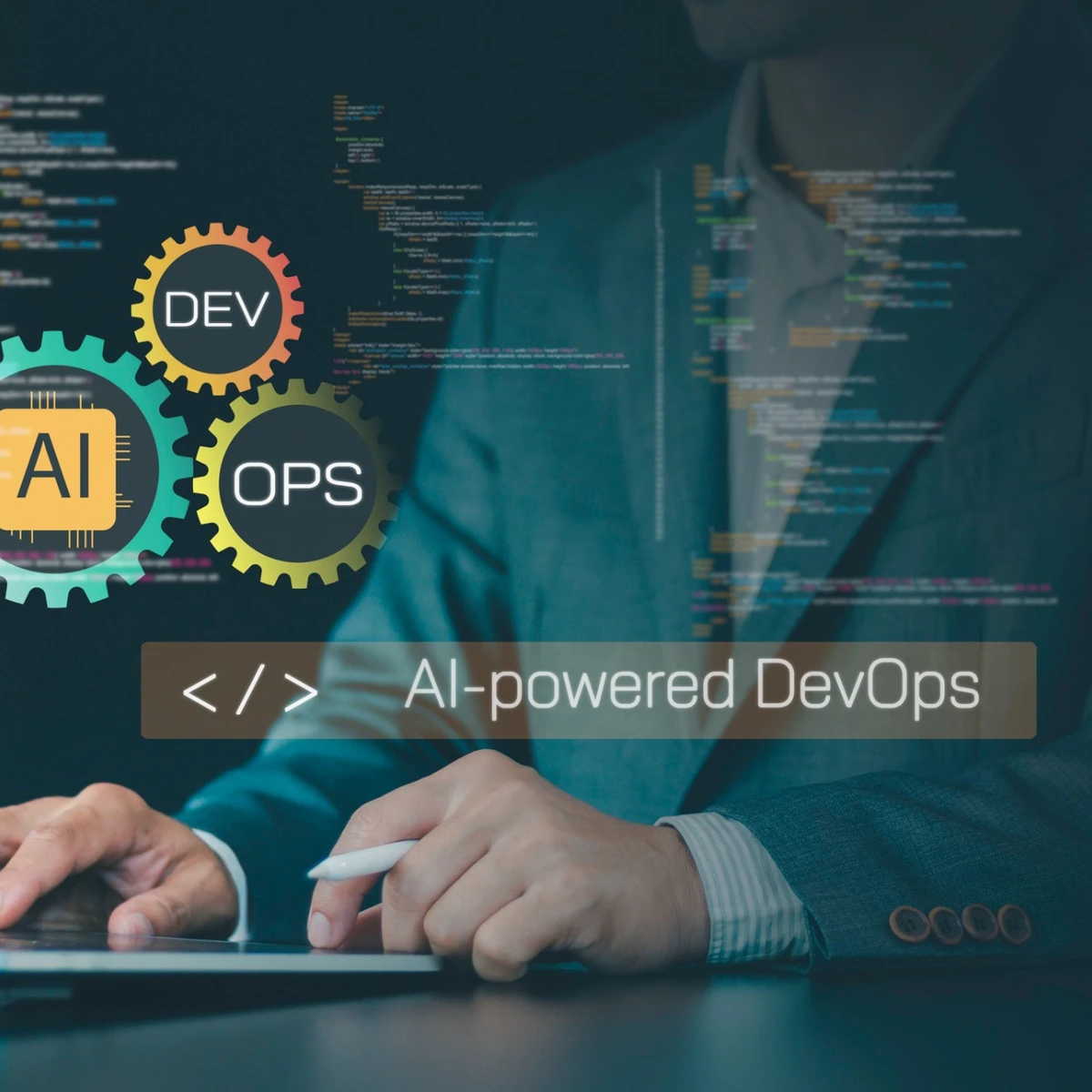
What once required entire software teams — weeks of coordination, handoffs, and review cycles — is increasingly executed by a single engineer.
At Meta Platforms, AI-powered development tools are no longer experimental productivity aids. They are reshaping how software is built at a structural level. Engineers now use AI systems to design, implement, test, and deploy features that previously demanded multiple specialized roles operating in parallel.
This is not a marginal efficiency gain.
It is a fundamental redefinition of how software work is organized.
From Team-Centered Development to Individual Leverage
For decades, modern software development optimized for specialization. Backend engineers, frontend developers, QA teams, and DevOps functions operated in tightly coupled pipelines. Progress depended as much on coordination as on technical skill.
AI is breaking that model.
Inside Meta, engineers increasingly rely on AI systems that generate production-ready code, identify bugs and edge cases early, suggest architectural improvements, and automate testing, deployment, and monitoring.
Engineers familiar with these workflows report a striking shift: tasks that once required coordination across multiple teams are now completed within a single development cycle — often without formal handoffs.
The primary gain is not speed alone.
It is the collapse of coordination overhead.
The AI-Augmented Developer Workflow
In this new model, the engineer’s role changes fundamentally.
The human no longer functions as an executor of discrete tasks, but as a system-level decision-maker. Engineers focus on defining intent, setting constraints, evaluating trade-offs, and validating outcomes under uncertainty.
AI systems handle the mechanical layers: boilerplate generation, refactoring, test creation, dependency analysis, and infrastructure scripting.
The bottleneck is no longer typing speed or task allocation.
It is reasoning quality.
Why Traditional Productivity Metrics No Longer Apply
Metrics such as story points, sprint velocity, and team throughput were designed for coordination-heavy environments. They assume handoffs, dependencies, and shared ownership.
AI-driven development breaks those assumptions.
Organizations experimenting with AI-first workflows increasingly track time-to-production per engineer, feature impact relative to effort, post-deployment stability, and iteration speed at the individual level.
In several domains — particularly internal tools and infrastructure-heavy systems — productivity gains are measured not in percentages, but in multiples.
This forces a reassessment of how engineering performance is evaluated and rewarded.
Skills, Careers, and the New Engineer Archetype
This shift directly reshapes career trajectories.
Routine coding ability is becoming table stakes. What differentiates high-impact engineers now is architectural reasoning, systems thinking, AI tool orchestration, effective prompting, and risk detection.
Engineers who can guide AI systems — and critically assess their output — gain disproportionate leverage.
Résumés will follow. AI tooling proficiency and system ownership increasingly sit alongside traditional programming languages.
Team Structures Are Being Quietly Rewritten
AI does not eliminate teams — but it compresses them.
As individual leverage increases, organizations experiment with smaller, flatter teams, fewer coordination layers, broader ownership per engineer, and faster experimentation cycles.
This introduces tension.
Many engineering organizations are built around hierarchies designed to manage coordination. As AI reduces coordination costs, those structures risk becoming liabilities rather than safeguards.
This Shift Extends Far Beyond Meta
Meta is not an anomaly.
Startups use AI to achieve scale with fewer engineers.
Enterprises deploy it to offset talent shortages and cost pressure.
Product teams rely on it to shorten feedback loops.
AI-assisted development is moving from edge case to default.
The competitive advantage no longer lies in larger teams — but in smarter workflows.
Strategic Implications for Companies
Organizations that successfully integrate AI into software development unlock faster innovation cycles, lower marginal cost per feature, higher engineering leverage, and greater resilience in tight labor markets.
Those that fail to adapt will not fall behind because they lack talent — but because their operating model no longer matches reality.
Key Takeaway
AI is redefining the unit of software production.
The team is no longer the primary engine of output — the AI-augmented individual is.
Organizations that continue to optimize for coordination-heavy structures will lose ground to those that redesign workflows around individual leverage, system thinking, and AI-first execution.
Sources & Further Reading
This article is based on publicly reported insights, industry analysis, and ongoing discussions around AI-assisted software development at large technology organizations.
- Meta Platforms — Engineering and AI tooling discussions referenced in interviews, conference talks, and internal productivity disclosures by Meta engineers and leadership.
- Industry-wide analysis — Observed patterns across AI-assisted development workflows at large technology companies and fast-scaling startups adopting AI-first engineering models.
- Software engineering research — Emerging studies and practitioner reports on AI-driven developer productivity, workflow compression, and reduced coordination overhead.
- AI tooling ecosystems — Analysis of modern AI coding assistants, agent-based development systems, and automated DevOps pipelines reshaping software production.
Where applicable, interpretations and conclusions reflect Arti-Trends’ independent editorial analysis of broader industry trends rather than isolated company claims.