

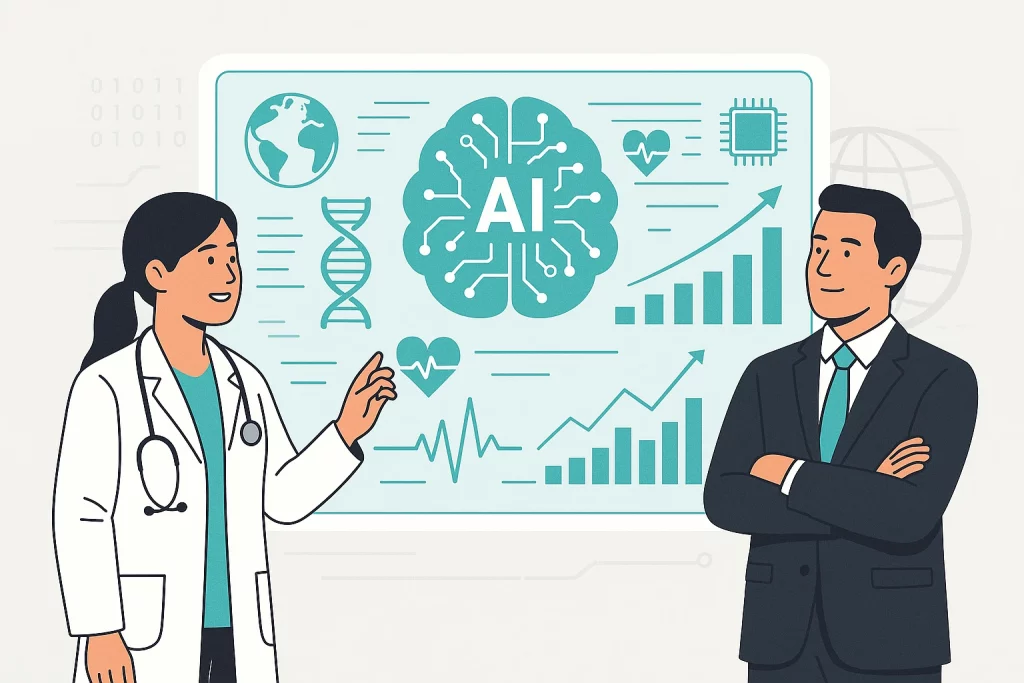
AI in healthcare investing is transforming the medical world — and for investors, this shift represents one of the most powerful opportunities of the decade. Artificial intelligence is no longer a futuristic concept; it’s a fundamental driver of efficiency, innovation, and profitability across the healthcare industry.
What used to be a slow-moving, conservative sector is now becoming data-driven, predictive, and globally scalable.
This isn’t just about robots in hospitals or faster diagnoses. AI in healthcare investing is about a new financial reality where technology reduces costs, improves outcomes, and creates entirely new markets. From diagnostics to drug discovery, the integration of AI is reshaping both medicine and the investment landscape behind it.
Healthcare costs are expected to exceed $10 trillion globally by 2030, while aging populations and chronic diseases strain existing systems. That economic pressure is precisely why AI matters: automation and prediction can offset labor shortages, streamline workflows, and enable preventive care at scale. Investors are backing solutions that promise not only better health outcomes but also measurable cost efficiency.
If you’re new to this field, explore our cornerstone guide on What Is Artificial Intelligence? The Ultimate Guide (2026) to understand how AI works and why it’s redefining industries worldwide.
Smarter Diagnostics, Smarter Investments
AI has become one of the most accurate diagnostic tools in modern medicine. Systems such as PathAI, Zebra Medical Vision, and Google DeepMind analyze X-rays, MRIs, and pathology slides with precision that often surpasses human ability.
In dermatology, AI detects early-stage skin cancer with 95% accuracy. Ophthalmology algorithms can spot diabetic retinopathy from retinal images long before patients notice symptoms. Even early signs of Alzheimer’s are now identified through AI-driven brain scans.
This “machine vision” doesn’t replace doctors — it augments them. Radiologists can review AI-flagged cases first, focusing on anomalies that truly matter. The result: faster decisions, fewer false positives, and a major boost in productivity.
Why this matters for AI in healthcare investing:
- Predictable SaaS-style revenue from hospital partnerships
- Global scalability with minimal marginal cost
- Tangible social impact aligned with strong financial performance
Startups like Tempus AI, which raised over $400 million to expand precision oncology, show that capital is flowing to companies capable of combining big data with real-world medical results. For investors, these businesses offer both growth and defensibility — powered by proprietary datasets that compound in value over time.
For anyone exploring AI in healthcare investing, diagnostics remains one of the most accessible and scalable entry points.
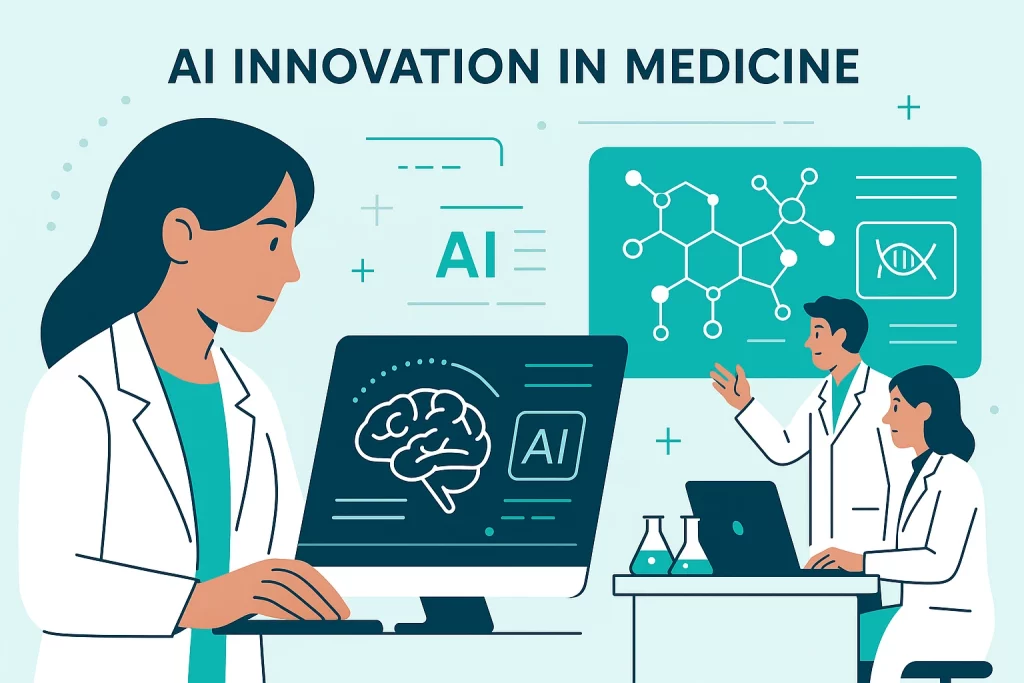
Drug Discovery and the Acceleration of Innovation
Developing a new drug once required a decade and billions in R&D. AI now compresses that process into months.
Companies like Insilico Medicine, Recursion Pharma, and Atomwise use machine learning to simulate molecular interactions and predict which compounds will succeed before they’re tested in humans. Insilico’s fibrosis drug reached clinical trials in just 18 months — a record pace that demonstrates the power of generative chemistry.
This acceleration changes the economics of medicine and the logic of investment. Lower costs, faster approvals, and smarter R&D pipelines mean higher margins and reduced risk. AI-driven drug discovery could cut development costs by up to 70% and shorten approval timelines by several years.
However, the sector remains high-risk. Many AI-biotech startups are pre-revenue, and clinical validation can take years. Savvy investors evaluate management teams, data partnerships, and intellectual property before allocating capital. Venture funds specializing in deep-tech biotech are emerging to meet this need.
This field has become a magnet for AI in healthcare investing, where biotech meets deep tech and data becomes the most valuable molecule in the lab.
Predictive and Preventive Healthcare
AI is shifting medicine from reactive to predictive. Instead of treating illness after it happens, algorithms can now anticipate it.
Wearable technology and predictive analytics are enabling continuous-care models that track early warning signs for diseases such as heart failure or diabetes. Platforms like Apple Health AI, Fitbit Health Solutions, and Oura Health analyze subtle changes in heart rate, sleep, and stress to flag potential risks before symptoms appear.
Beyond wearables, hospitals are adopting AI-based population-health systems that monitor large patient cohorts to identify emerging public-health patterns. Imagine insurers adjusting premiums based on real-time behavioral data — rewarding prevention instead of just covering treatment.
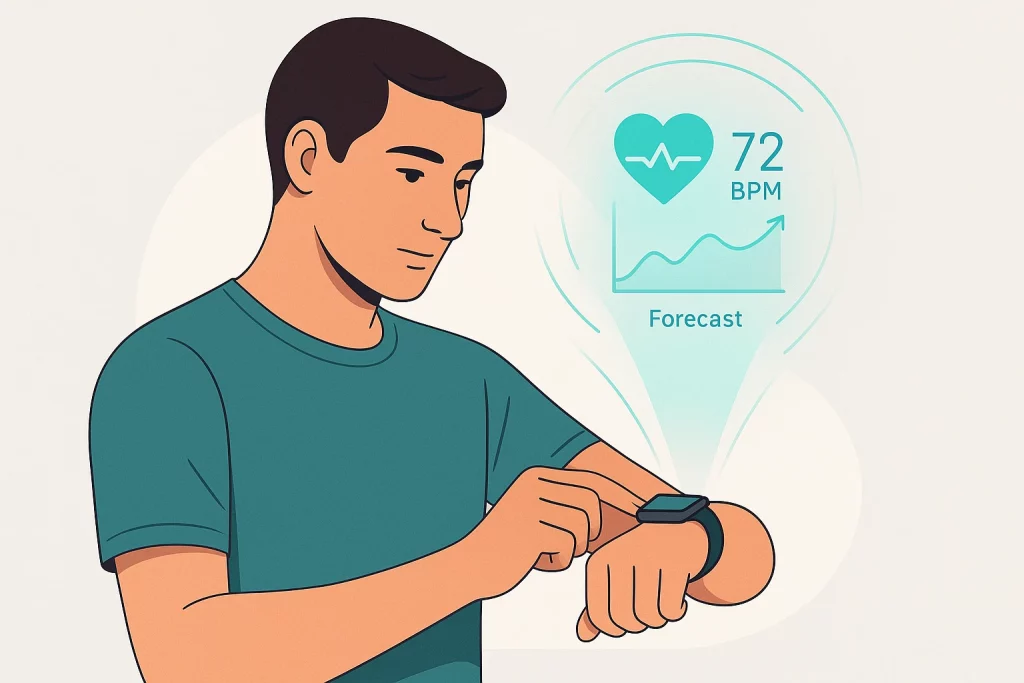
For investors, this trend represents a massive opportunity: scalable consumer-health ecosystems, subscription-based data platforms, and partnerships between tech firms, insurers, and healthcare providers.
The digital-health market is forecast to surpass $600 billion by 2032, and AI-driven healthcare investments will drive much of that growth.
According to a recent World Health Organization report on digital health innovation, AI-based preventive systems could reduce global treatment costs by up to 15% over the next decade.
Operational AI: The Silent Efficiency Revolution
Behind the scenes, hospitals are using AI to make healthcare more efficient and less expensive. Predictive algorithms optimize patient inflow, staffing, and inventory management.
At the Cleveland Clinic, AI-based forecasting reduced emergency-room waiting times by 25%. Similar systems automate billing, logistics, and maintenance schedules for medical equipment — saving millions annually and improving patient satisfaction.
Operational AI often follows a software-as-a-service (SaaS) model: hospitals subscribe to analytics dashboards or workflow-automation tools, generating steady recurring revenue for vendors. Giants like Oracle Cerner, Amazon Health, and Epic Systems are integrating AI to maintain dominance in hospital IT infrastructure.
For investors focused on AI in healthcare investing, this space offers the best of both worlds: long-term stability and consistent scalability. It’s not as glamorous as drug discovery, but it’s quietly building the digital backbone of modern healthcare.
Ethics and Regulation: Risk or Moat?
Every innovation in healthcare brings responsibility.
AI models trained on biased data or lacking transparency can produce dangerous outcomes. Regulators such as the FDA and EMA are enforcing stricter standards for data quality, model explainability, and patient consent.
In Europe, the EU AI Act will classify medical AI as a high-risk category, requiring full traceability of datasets and algorithmic decisions. Meanwhile, the U.S. FDA is piloting continuous-learning approvals for adaptive algorithms that update without resubmission.
For investors, this can be both a barrier and a moat.
Companies that design for compliance from day one gain a durable competitive advantage. Ethical AI is becoming a trust premium — a signal to regulators, clinicians, and consumers alike.
When analyzing potential AI-driven healthcare investments, look for:
- Regulatory-approved AI systems already in clinical use
- Transparent governance and data-security frameworks
- Partnerships with hospitals or academic institutions for validation
Ethics isn’t the enemy of innovation; it’s what makes innovation sustainable — and profitable.
Global Investment Outlook for AI in Healthcare
The global AI-in-healthcare market is projected to grow from $20 billion in 2023 to $180 billion by 2030, representing a CAGR of 35%+. But beyond the numbers, understanding where the capital is flowing helps identify tomorrow’s winners.
Venture Capital and Startup Activity
Venture funds such as Andreessen Horowitz, Sequoia, and General Catalyst are doubling down on AI-healthtech startups. Early-stage deals focus on data infrastructure and predictive analytics, while late-stage funding targets clinical AI validation and global expansion.
In 2024 alone, over $5 billion was invested in AI-health startups, with strong participation from corporate investors like Google Health and Amazon. The most active regions include the U.S., Europe, and Singapore, where supportive regulation and robust biotech ecosystems foster innovation.
Investment Strategies
- Early-stage investors gain exposure to exponential growth but face regulatory and market-fit risks.
- Late-stage investors prefer validated clinical models and recurring B2B contracts with hospitals or insurers.
- Public-market investors can leverage ETFs such as ARK Genomic Revolution (ARKG) or Global X Genomics & Biotechnology (GNOM) for diversified exposure.
The smartest portfolios balance infrastructure plays (chips, cloud, data pipelines) with application innovators (diagnostics, genomics, predictive tools).
The future of AI in healthcare investing will depend on data infrastructure, regulatory agility, and global collaboration.
A 2025 PwC Global AI Investment Outlook predicts that healthcare will capture nearly one-fifth of total AI investment value by 2030, confirming the growing momentum behind AI-driven healthcare ventures.
Also explore AI in Finance and Investing to see how similar strategies are reshaping financial markets.
The Future: Personalized, Predictive, and Profitable
The next decade will define how medicine adapts to AI.
From digital twins that test treatments before they’re applied to AI systems that personalize medication dosages in real time — the boundary between technology and biology is disappearing.
The rise of digital twins — virtual patient models that simulate reactions to treatments — will revolutionize precision medicine. Pharmaceutical companies are already building hybrid labs where AI-driven simulations run thousands of virtual trials before a single human dose is administered.
Healthcare is moving from a reactive model to one that is continuous and personalized, powered by data and refined by algorithms.
For investors, this is more than a chance to capture growth — it’s an opportunity to fund the infrastructure of future healthcare itself.
Conclusion
AI in healthcare investing isn’t about chasing hype. It’s about understanding how artificial intelligence is permanently reshaping one of the world’s largest and most essential industries.
From diagnosis to prevention, from hospitals to homes, AI is driving the next era of medicine — one where innovation, accessibility, and financial growth align.
Ultimately, this transformation isn’t about replacing doctors or cutting costs. It’s about empowering humans with smarter tools, freeing clinicians to focus on empathy and complex decision-making while machines handle the repetition.
As AI in healthcare investing continues to evolve, success will come to those who balance innovation with patient trust.
Invest wisely, think long-term, and look for companies where technological progress and human benefit evolve together.
Continue exploring how AI is reshaping global markets in our cornerstone guide: What Is AI Investing? The Ultimate Guide (2026)