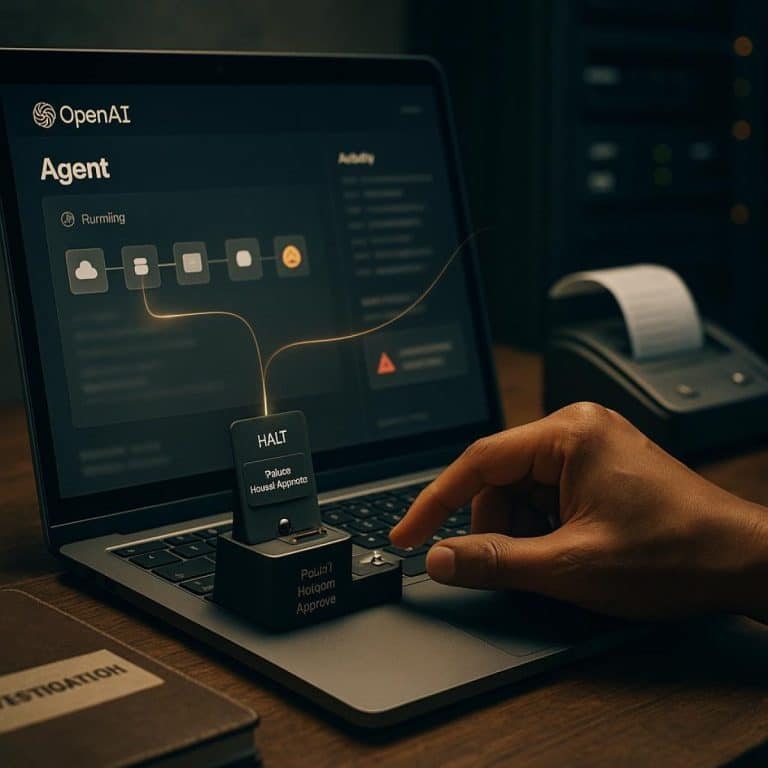
Week 2 is where the AI conversation quietly changes.
The excitement of the new year fades. Roadmaps solidify. Budgets unlock — but not blindly. This is the week when organizations stop asking what AI could do and start deciding what they are actually willing to run, pay for, and defend.
This shift reflects a broader transition we’ve been tracking across the AI landscape, where organizations move beyond experimentation toward structured deployment — a pattern also explored in our in-depth guide on how artificial intelligence is actually used in real-world business environments.
There are fewer headlines this week. That doesn’t mean less movement. It means decisions are happening below the surface: pilots are being reviewed, costs are being questioned, and governance is being pulled closer to the center of AI strategy.
In the next three minutes, you’ll see the signals that matter for the week ahead — not speculation, not hype, but the structural shifts shaping how AI is deployed in 2026.
How Arti-Trends Selects These Signals
Our editorial filter is simple.
We focus on developments that are:
- Actionable — you can respond this week
- Structural — they affect infrastructure, governance, cost, or lock-in
- Compounding — their impact builds over months, not days
We intentionally ignore rumor-driven model wars and capability claims without real-world consequences.
We track leverage, not noise.
The Core Signals Defining Week 2
Signal 1: AI Moves From Pilot to Procurement
For many organizations, the experimentation phase is ending.
AI pilots launched in Q3 and Q4 are now being reviewed with a different lens. The question is no longer “Does this work?” but “Is this worth operationalizing?”
That shift matters. Procurement introduces friction — contracts, SLAs, compliance, exit clauses. Tools that felt impressive in demos now have to survive real scrutiny.
Why this matters
Once AI enters procurement, it becomes infrastructure. And infrastructure decisions are slow to reverse.
What to watch this week
- Language shifting from “experiments” to “approved vendors”
- RFPs emphasizing uptime, latency, data handling, and support
- Internal pressure to reduce the number of active pilots
What to do now
- Builders: document reliability, not just capability
- Teams: prepare clear ROI narratives tied to workflows
- Decision-makers: define kill-criteria before scaling
Signal 2: Cost Visibility Becomes a Hard Requirement
AI spending is no longer tolerated just because it’s “innovative.”
Finance teams are now asking for visibility: per-user cost, per-task cost, and usage ceilings. This is especially true for generative AI workloads where costs scale invisibly.
The result: more scrutiny, more monitoring, fewer blank checks.
Why this matters
AI that cannot explain its cost structure will struggle to survive budget reviews.
What to watch
- Usage dashboards becoming mandatory
- Token limits, inference caps, and internal chargeback models
- Pressure to justify AI usage at the department level
What to do now
- Audit inference, token, and infrastructure costs
- Identify break-even points per use case
- Flag workloads that scale poorly under real usage
This growing demand for cost transparency mirrors a wider shift in enterprise adoption, where AI is treated as an operational asset rather than an experiment — a dynamic we analyze further in our overview of how AI is implemented inside modern businesses.
Signal 3: Enterprise AI Stacks Begin to Consolidate
Tool sprawl is becoming a liability.
Organizations that adopted multiple AI tools across teams are now feeling the pain: overlapping functionality, inconsistent governance, fragmented data flows, and rising costs.
Week 2 is where consolidation conversations accelerate.
Why this matters
The AI stack is moving toward fewer, deeper integrations — not best-of-breed everywhere.
What to watch
- “Platform-first” language in internal discussions
- Reduced tolerance for standalone tools without APIs
- Central IT and security teams reclaiming oversight
What to do now
- Builders: clearly articulate where you fit in the stack
- Teams: map overlapping tools and eliminate redundancy
- Investors: watch which platforms absorb smaller players
This consolidation trend aligns with a broader move toward fewer, more integrated platforms — an evolution we track closely in our ongoing coverage of AI tools, platforms, and ecosystem shifts.
Signal 4: Governance Tightens — Quietly
There are no splashy announcements here.
Instead, governance creeps in through policy updates, compliance reviews, and legal sign-offs. AI is being pulled into existing risk frameworks rather than treated as an exception.
This shift is subtle — and permanent.
Why this matters
Once governance is embedded, it defines how fast AI can move.
What to watch
- Legal teams involved earlier in AI decisions
- Documentation requirements around data usage
- Internal policies formalizing acceptable AI behavior
What to do now
- Align AI workflows with auditability from day one
- Document model decisions and data sources
- Treat governance as an enabler, not an obstacle
Signal 5: Evaluation Replaces Benchmark Bragging
Public benchmarks are losing influence.
Organizations care less about leaderboard positions and more about whether models behave predictably in their own environments. Reliability, failure modes, and monitoring now matter more than peak scores.
Why this matters
AI credibility is shifting from marketing claims to operational performance.
What to watch
- Mentions of evaluation frameworks and internal testing
- Focus on failure rates and edge cases
- Less emphasis on “best model” narratives
What to do now
- Define success metrics tied to business outcomes
- Stress-test assumptions under real conditions
- Monitor performance continuously, not periodically
Pattern Watch: What These Signals Have in Common
The common thread across Week 2 is discipline.
AI is moving from a capability race to an execution phase. The winners won’t be the teams with the most tools, but those with the clearest systems.
Key characteristics of this phase:
- Fewer experiments
- Higher standards
- Real accountability
This isn’t a slowdown. It’s a filter.
Looking Ahead (Without Predictions)
As Week 2 closes, several tensions continue to build:
- Flexibility versus vendor lock-in
- Cost control versus capability loss
- Speed versus governance
What looks quiet on the surface often hides the most consequential decisions. By the time changes become visible in headlines, the direction has already been set.
Closing Reflection
The AI race isn’t slowing down.
It’s becoming more selective.
Where is your organization right now — experimenting, consolidating, or committing?