Why this matters
Artificial intelligence is often framed as a solution to climate change — optimizing energy grids, improving forecasting, and accelerating sustainability research. Yet behind that promise lies a growing contradiction: the rapid expansion of AI is itself becoming a significant environmental burden.
As large language models and generative AI systems scale, their demand for electricity, water, and physical infrastructure is rising sharply. According to reporting by The Guardian, this hidden footprint is triggering concern among researchers, policymakers, and environmental experts who warn that AI’s growth trajectory may collide with climate goals.
This matters because AI is no longer a niche technology. It is becoming foundational infrastructure — and infrastructure has consequences.
Key Takeaways
- Large AI models require enormous amounts of energy and water to train and operate.
- Data centers supporting AI workloads are expanding rapidly worldwide.
- Water usage for cooling is emerging as a critical and underreported issue.
- AI’s environmental cost challenges the narrative of “digital sustainability.”
- Policymakers and companies face growing pressure to reconcile AI growth with climate commitments.
The Energy Cost of Intelligence
Training state-of-the-art AI models consumes vast amounts of electricity, often comparable to the lifetime emissions of thousands of households. Beyond training, inference — the everyday use of AI systems — creates a continuous energy demand that scales with user adoption.
Unlike traditional software, AI workloads do not plateau easily. As models grow larger and more capable, computational intensity increases faster than efficiency gains. This dynamic places sustained pressure on power grids, particularly in regions where data centers cluster.
While some operators invest in renewable energy offsets, critics argue that offsets alone do not address the absolute growth in energy consumption driven by AI.
Water: The Invisible Constraint
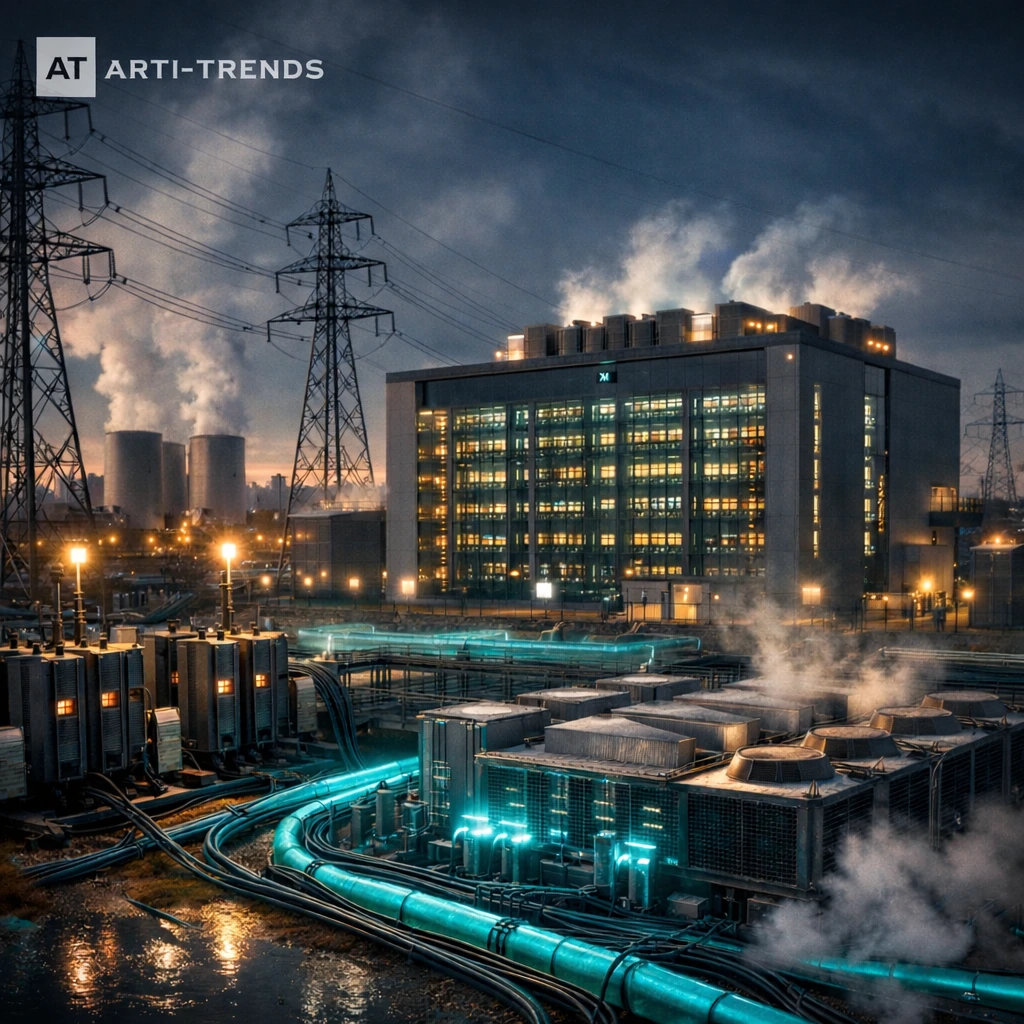
Less visible, but equally significant, is AI’s dependence on water. Large data centers rely on water-intensive cooling systems to manage the heat generated by dense compute hardware.
In water-stressed regions, this creates tension between technological expansion and local resource availability. Reports highlighted by The Guardian point to communities raising concerns over data centers competing with agriculture and residential needs.
Unlike carbon emissions, water impact is hyper-local. The environmental cost is not abstract — it is felt directly where AI infrastructure is built.
Data Centers as Climate Infrastructure
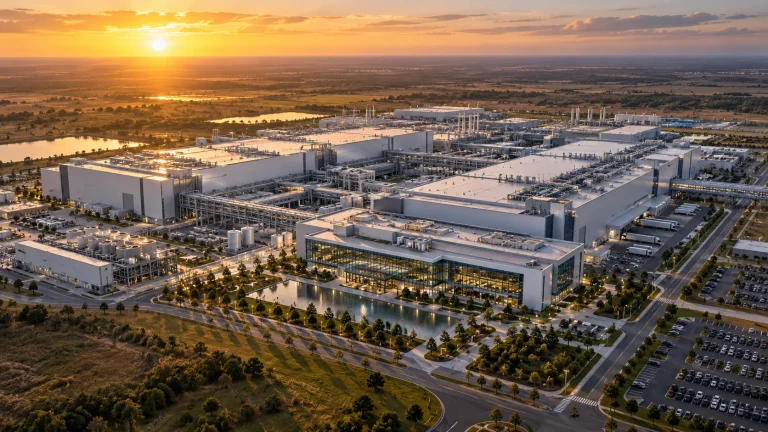
AI’s environmental footprint is inseparable from its physical footprint, as AI infrastructure and data centers increasingly function as energy-intensive industrial facilities rather than neutral digital backends.
As explored across discussions on AI infrastructure, the AI boom is reshaping land use, energy planning, and regional development strategies. Governments eager to attract tech investment often approve data center projects faster than environmental assessments can fully account for long-term impact.
This raises a strategic question: should AI infrastructure be governed more like heavy industry than software?
The Sustainability Narrative Under Pressure
AI companies frequently highlight how their technologies can improve efficiency and reduce emissions across other sectors. While these benefits are real, critics argue they are increasingly used to mask AI’s own rising footprint.
This tension highlights the growing ethical and societal implications of AI, where efficiency gains risk being overshadowed by rising absolute resource consumption.
The paradox is clear: AI may help optimize systems — but only if its own growth is managed responsibly. Without constraints, efficiency gains risk being offset by sheer scale.
This mirrors broader debates in sustainability, where technological efficiency alone has rarely reduced total resource consumption.
Implications for Industry and Policy
For AI Companies
- Environmental reporting may face stricter scrutiny.
- Energy and water efficiency become competitive differentiators.
- Data center location decisions carry reputational risk.
For Enterprises
- AI adoption may come with indirect sustainability costs.
- ESG reporting increasingly intersects with AI usage.
For Policymakers
- AI infrastructure may require clearer environmental standards.
- Local communities demand greater transparency and oversight.
A Turning Point in the AI Debate
The discussion around AI is expanding beyond performance and productivity. Environmental impact is becoming a first-order concern, not a secondary consideration.
As AI systems embed themselves deeper into society, their physical consequences can no longer be treated as externalities. The next phase of AI governance will likely revolve around a difficult balance: enabling innovation while imposing meaningful environmental constraints.
The debate increasingly centers on whether current growth trajectories support the long-term sustainability of AI systems, or whether structural constraints will become unavoidable.
What Happens Next
AI’s environmental footprint is unlikely to slow in the near term. Demand for smarter, faster systems continues to grow. However, pressure is building for:
- more efficient model architectures
- transparent reporting of energy and water usage
- policy frameworks that treat AI infrastructure as climate-relevant assets
AI’s future will not be judged solely by what it enables, but by what it costs.
At Arti-Trends, we track these inflection points closely — because they reveal how AI transitions from digital promise to physical reality.
Source
The Guardian