Introduction
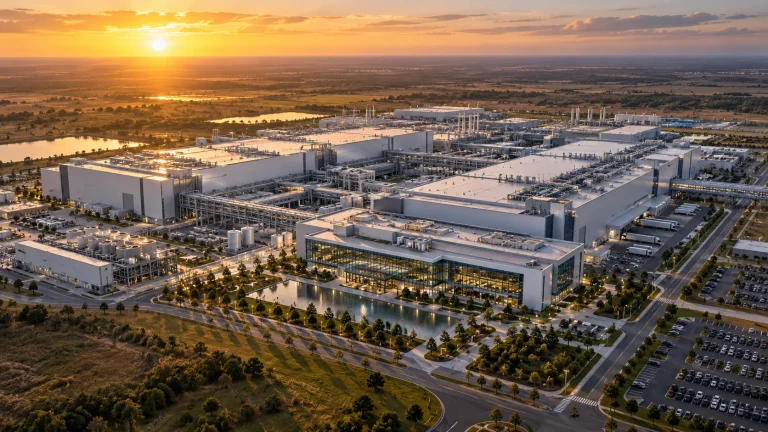
AI United States datacenters are entering a new era of scale and strategic importance. Google has announced a massive $40 billion investment to build three new datacenters in Texas, marking one of the largest AI-infrastructure expansions in the company’s history. According to Reuters, the datacenters will support Google’s rapidly growing AI services, cloud workloads, and future multimodal models—highlighting the explosive global demand for compute capacity.
This announcement isn’t just a milestone for Google. It signals a worldwide shift: artificial intelligence has outgrown the traditional cloud. Modern AI models require unprecedented amounts of compute power, specialized hardware, optimized cooling systems, and direct access to large-scale energy networks. By committing tens of billions to new infrastructure, Google enters a new chapter in the competitive global race for AI dominance.
On an international level, the move has far-reaching consequences. It affects supply chains, energy markets, regional economies, global datacenter strategy, and the competitive balance between the U.S., Europe, and Asia. The stakes are clear: whoever controls the compute, controls the future of AI.
Recent Developments in AI United States Datacenters
Google confirmed that it will construct three new AI-focused datacenters across Texas, representing a $40 billion build-out, as first reported by Reuters. These facilities will serve as critical hubs for training and deploying next-generation AI models, powering services such as:
- Google Cloud’s enterprise AI offerings
- Gemini-based products
- Multimodal search
- On-device AI integrations
- Global internet traffic and data processing
Texas has quickly become America’s hottest datacenter region. Companies choose the state because of:
- competitive energy pricing
- vast land availability
- proximity to major fiber infrastructure
- pro-tech government incentives
- a fast-growing pool of engineering and technical labor
Google’s move aligns with a wider trend: Big Tech is building AI super-infrastructure at an unprecedented pace. Bloomberg recently reported that Microsoft, Meta, Amazon, and Google are collectively accelerating investments in GPU clusters, data throughput systems, and advanced power-intensive datacenter campuses to stay competitive in the AI boom.
Traditional datacenters—once designed mainly for cloud storage and basic computing—are transforming into AI supernodes, optimized for massive GPU farms, liquid cooling, and high-bandwidth architecture.
Why This Investment Matters
1. The global AI race is accelerating
AI development is no longer limited by algorithms—it is limited by compute. Companies that can train the most advanced models and deploy them at scale gain a decisive advantage in:
- product velocity
- inference speed
- innovation cycles
- market competitiveness
Google’s $40 billion investment is a direct response to similar high-stakes infrastructure pushes from Microsoft (backed by OpenAI), Meta’s Llama ecosystem, and Amazon’s AWS AI roadmap.
In short: the AI war is now a datacenter war.
2. Impact on energy networks and sustainability
Datacenters are becoming some of the largest power consumers in the United States. Experts warn that next-generation AI will:
- dramatically increase national energy demand
- put pressure on aging grid infrastructure
- boost water consumption for cooling
- accelerate the need for renewable energy investment
Texas, historically known for its volatile grid (such as the 2021 outages), will need to adapt quickly. Google states that it will commit to long-term energy purchasing agreements to stabilize consumption and push renewable expansion, though specifics have not yet been disclosed.
3. Clear signal to investors: AI infrastructure is the new gold rush
AI isn’t slowing down—and neither is the demand for compute. Investment trends show massive upward momentum in sectors like:
- GPU manufacturers (NASDAQ: NVDA)
- Power and energy suppliers (NYSE: XOM)
- Datacenter REITs (NASDAQ: EQIX)
- Cooling and power-distribution hardware
- AI-focused cloud software (NASDAQ: GOOGL, NASDAQ: MSFT)
As Bloomberg noted, AI startups and AI infrastructure providers are attracting record valuations. The demand for compute is rewriting market expectations.
4. Competitive implications for Europe and Asia
While the U.S. expands aggressively, Europe struggles with:
- slower regulatory approval cycles
- stricter environmental policies
- higher electricity prices
- land-use limitations
Without equivalent investments, Europe risks becoming dependent on American compute infrastructure—potentially affecting sovereignty over AI development and innovation.
Practical Implications for Users and Businesses
1. Faster, more scalable AI services
For businesses relying on Google Cloud, Vertex AI, or Gemini-powered services, the Texas datacenters will deliver:
- reduced latency
- enhanced reliability
- higher throughput for model inference
- more capacity for training at scale
- improved global redundancy
Startups building AI-heavy applications (SaaS, generative AI, agents, multimodal pipelines) benefit directly.
2. Developers gain access to larger compute reserves
Companies building:
- large multimodal models
- synthetic-data pipelines
- autonomous agents
- AI-powered analytics tools
- on-device AI integrations
will see expanded access to powerful cloud GPU clusters and lower wait times for training and deployment resources.
3. Increased opportunities for AI infrastructure investments
This expansion reinforces a rapidly growing thesis:
AI infrastructure is a long-term, high-growth investment category.
Relevant publicly traded sectors include:
- Cloud providers: NASDAQ: GOOGL, NASDAQ: MSFT
- GPUs & semiconductor manufacturers: NASDAQ: NVDA, NASDAQ: AMD
- Datacenter REITs & infrastructure operators: NASDAQ: EQIX
- Energy suppliers powering AI hubs: NYSE: XOM
As AI adoption rises, these companies see sustained demand regardless of economic cycles.
4. Global competition around datacenters intensifies
The more compute is centralized in the U.S., the more companies outside the U.S. may face challenges such as:
- higher compute costs
- longer latency
- dependence on American cloud policies
- reduced access to cutting-edge GPUs
This could push regions like the EU to accelerate their own “AI infrastructure independence” strategies.
Criticism and Concerns
1. Energy consumption and environmental sustainability
Critics warn that a project of this magnitude could:
- strain regional power grids
- increase carbon emissions
- accelerate freshwater depletion
- impact local ecosystems
Google claims to be targeting 24/7 carbon-free energy, but its datacenter expansion raises questions about how soon this is achievable.
2. Growing local resistance to datacenters
Across the U.S., communities have expressed concerns about:
- noise pollution
- heat output
- land use
- rising electricity costs
- heavy water consumption for cooling
Although Texas generally welcomes Big Tech, opposition is beginning to emerge as local infrastructure gets stretched.
3. Concentration of AI power among Big Tech
With Google, Microsoft, Meta, and Amazon building near-monopolistic control over compute, regulators worry about:
- reduced competition
- gatekeeping access to AI capabilities
- market abuse
- price manipulation for GPU resources
The EU and U.S. are already investigating AI infrastructure concentration as a potential antitrust issue.
Conclusion
Google’s $40 billion investment in AI United States datacenters marks a defining moment for the AI industry. It showcases the escalating importance of compute power and reveals how Big Tech is racing to build the infrastructure that will define the next decade of AI innovation.
For users, developers, and companies worldwide, the message is clear:
AI’s future depends on massive, energy-intensive super-infrastructure—and the race to build it is just beginning.
Update June 19, 2026: This article was refreshed to improve internal context and discovery signals.