Introduction – The New Work Revolution
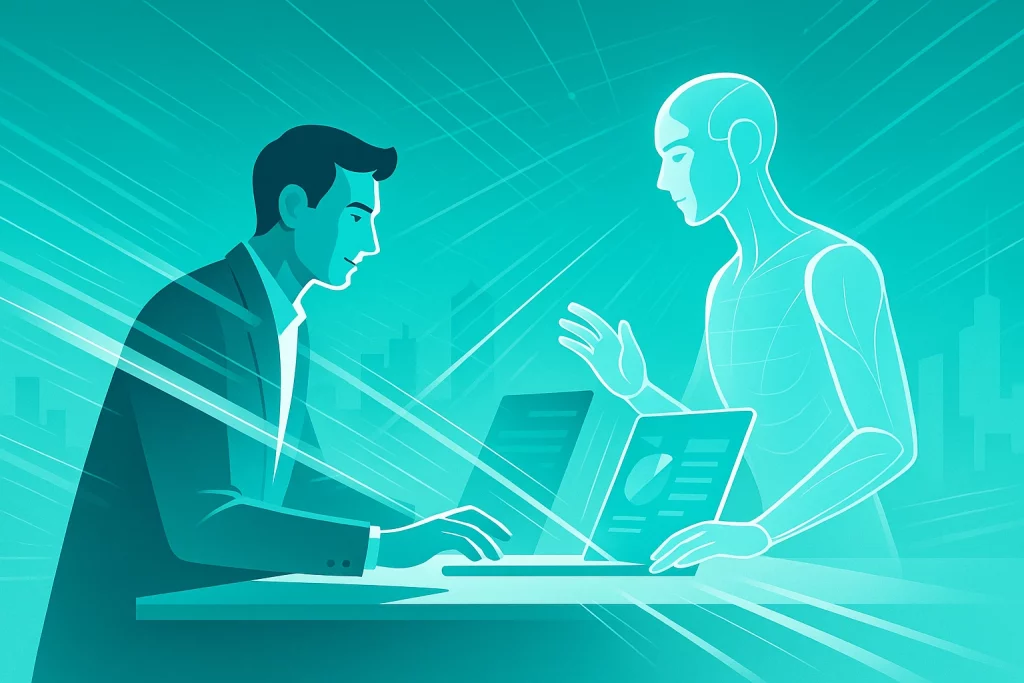
AI and the Future of Work is unfolding right now. Work is changing faster than any generation has ever experienced. Meetings happen across continents, AI tools summarize discussions before you hang up, and your next project draft might already be written by a digital co-worker you never hired.
Artificial intelligence is no longer a distant innovation — it’s the invisible teammate transforming how we think, create, and collaborate. It reshapes job descriptions, workflows, and even the way we define meaningful work.
Unlike earlier industrial shifts, today’s transformation touches not just what we do, but who we are at work. Our creativity, decision-making, and sense of purpose are being reframed by systems that learn from us — and increasingly, with us.
The question isn’t whether AI will change our jobs — it’s how we’ll evolve alongside it. Because the future of work won’t belong to those who resist automation, but to those who collaborate with intelligence.
👉 Discover the full picture in our guide: What Is Artificial Intelligence? The Ultimate Guide (2026).
AI and the Future of Work: From Machines to Minds
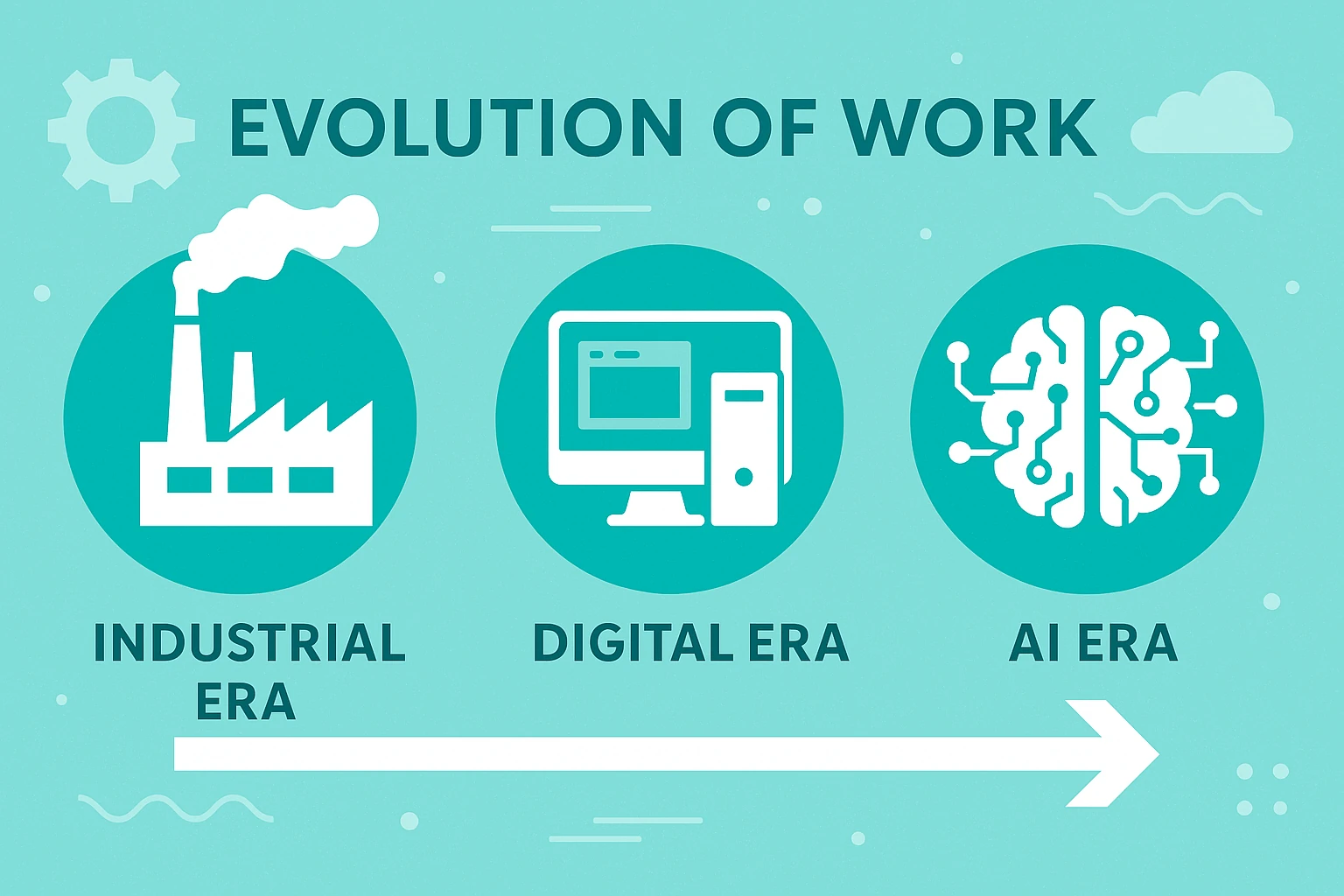
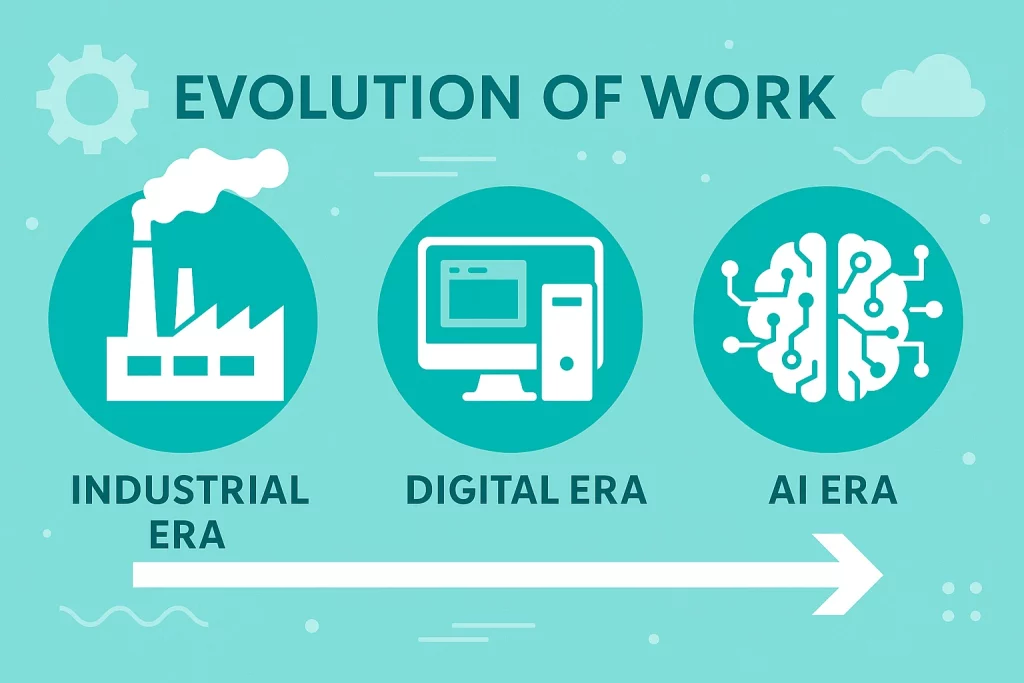
Every major leap in technology has redefined what it means to work. The Industrial Revolution mechanized effort. The Digital Revolution automated information. And now, the AI Revolution is automating intelligence itself.
This marks a profound shift: humans move from execution to orchestration. We design and direct intelligent systems that think, plan, and adapt in real time.
AI models like GPT-4, Gemini, and Claude perform routine analysis or content generation in seconds — tasks that once demanded hours of human effort. Meanwhile, people are freed to focus on higher-order thinking: creativity, empathy, and leadership.
Consider how professions are already evolving:
- Accountants now oversee AI-based auditing systems.
- Marketers co-create ad campaigns with generative design tools.
- Teachers use AI tutors to personalize learning for every student.
According to the McKinsey Global Institute, up to 30% of global work activities could be automated by 2030, yet productivity and innovation are expected to surge.
The AI and the Future of Work debate isn’t about technology itself, but about how humans redefine their role within it.
“Technology doesn’t replace people — it replaces tasks. The people who master the new tools replace those who don’t.”
2. Automation vs. Augmentation: What AI Really Changes
The true story of AI and the Future of Work isn’t about replacement — it’s about reinforcement.
Automation removes friction; augmentation multiplies potential.
AI copilots and agentic systems are now active collaborators.
- A marketer uses ChatGPT to draft ideas and then refines them with brand nuance.
- An HR manager relies on predictive analytics to identify team burnout before it happens.
- An architect visualizes sustainable structures using generative algorithms.
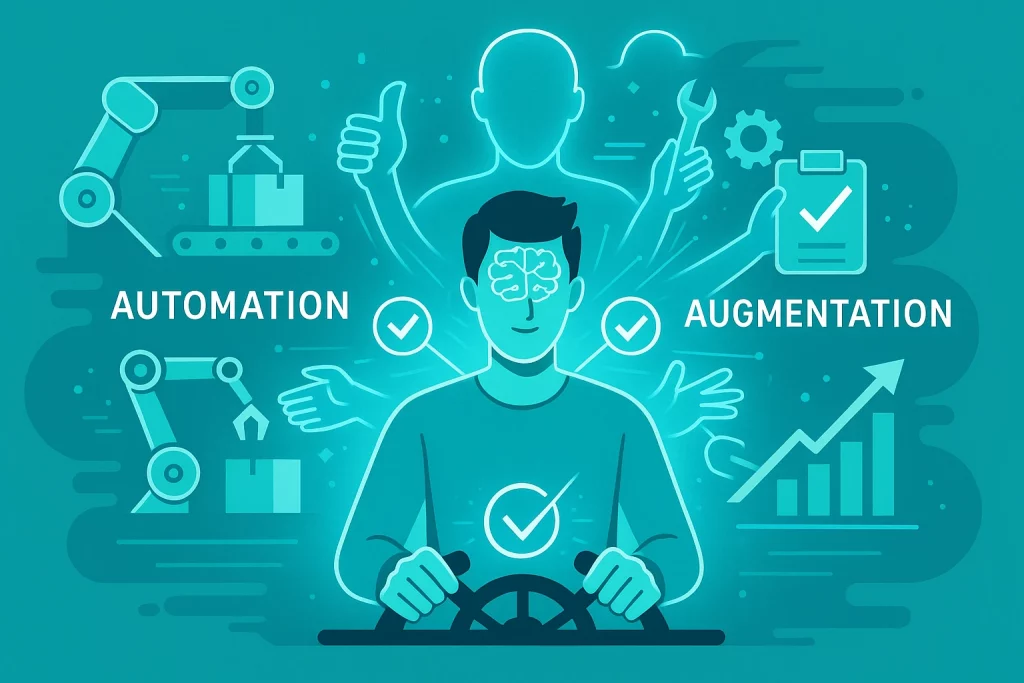
These examples show that AI doesn’t diminish human value — it amplifies it. The professionals who thrive won’t compete with AI, but will leverage it to achieve results impossible alone.
Still, augmentation demands balance. Rely too much on automation, and you lose creativity; ignore it, and you lose relevance. The key is to build trust without dependence — letting AI handle precision while humans provide purpose.
Explore this balance further in AI and Creativity: How Machines Inspire Human Imagination.
3. How Companies Are Redesigning Work with AI
Organizations worldwide are rethinking what “work” means in an intelligent era. Rather than adding AI as a tool, leaders are redesigning entire workflows around collaboration between humans and machines.
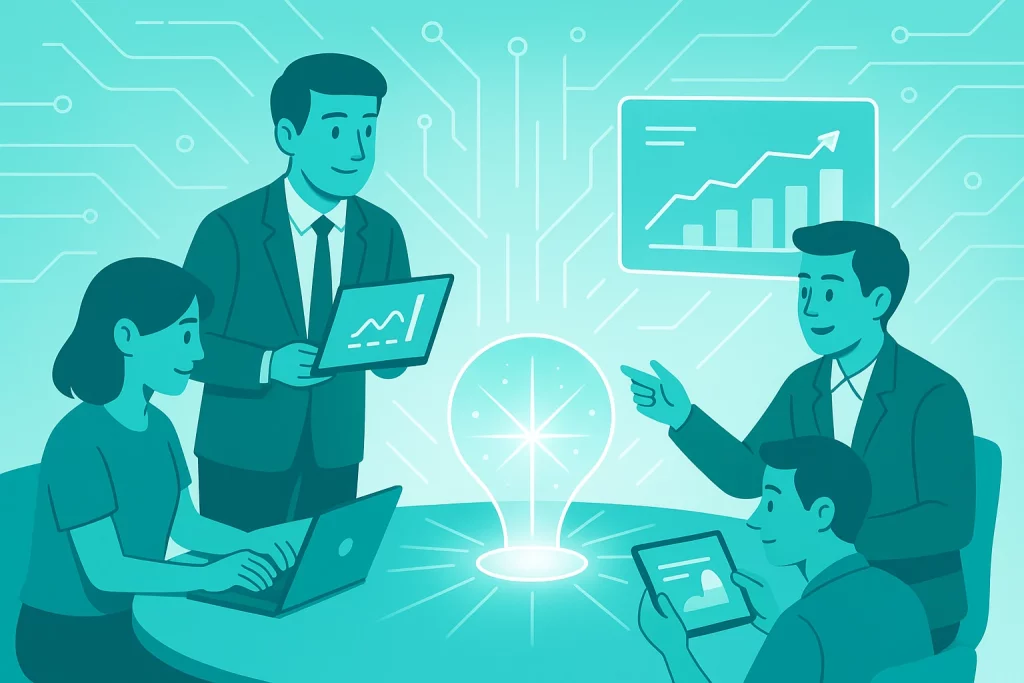
At Siemens, engineers use AI copilots to model complex systems before physical prototypes exist.
At Accenture, consultants partner with generative models to build client reports 60% faster.
At Google, AI suggests learning paths for employees based on their project history.
Three strategies define this new approach:
- Mapping AI-ready roles. Identifying where automation supports — not replaces — employees.
- Reskilling at scale. Continuous learning programs that merge data literacy and creativity.
- Redefining productivity. Shifting focus from “hours worked” to “impact created.”
Companies that integrate AI into culture, not just operations, see measurable gains in engagement and innovation. The lesson? The future of work isn’t just about new tools — it’s about new mindsets.
4. The Rise of AI-Driven Professions
Every revolution reshapes the job market — and AI is doing it at record speed.
While repetitive roles decline, AI-driven professions are emerging across industries:
- Prompt Engineers craft the language that directs large models.
- AI Trainers teach systems context and nuance through human feedback.
- Data Ethicists ensure transparency and accountability in automation.
- Automation Strategists optimize workflows that merge people and bots.
- Generative Designers blend creativity and computation to build smarter products.
The World Economic Forum’s Future of Jobs Report 2025 forecasts 97 million AI-related jobs will emerge by 2030.
One of the biggest shifts in AI and the Future of Work is how creative and technical skills are merging into hybrid roles.
5. The Human Advantage: Skills That Will Matter Most
AI can analyze patterns, predict outcomes, and mimic tone — but it can’t care. And that’s where our strength lies.
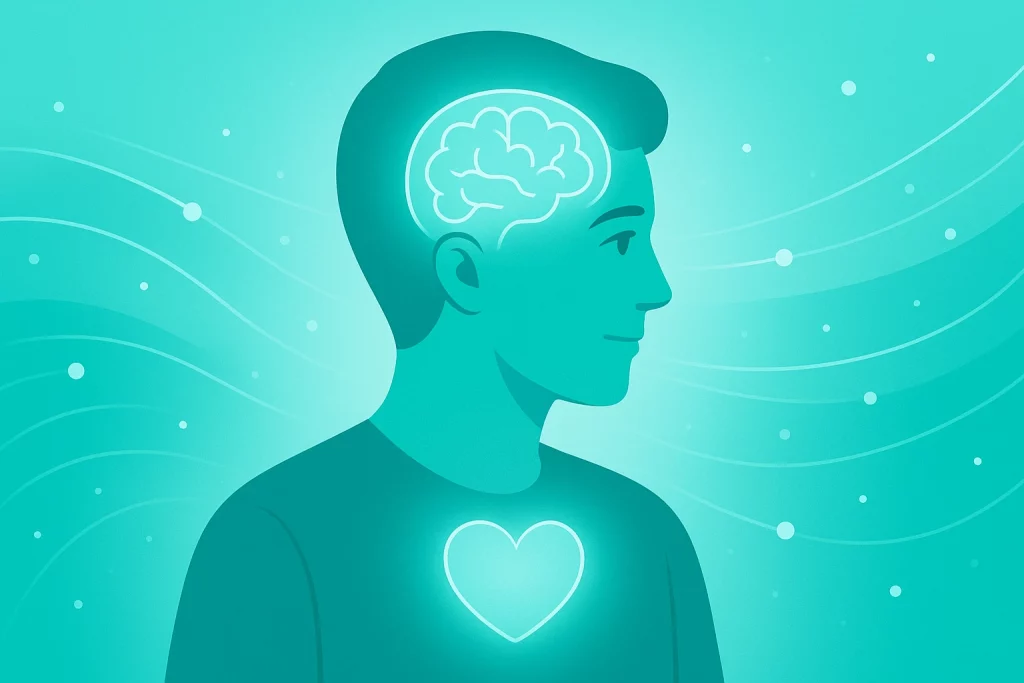
In the coming decade, the most valuable professionals will combine AI fluency with timeless human depth. This includes:
- Critical thinking – interpreting AI insights, not accepting them blindly.
- Creativity – using generative tools as idea partners.
- Communication – turning data into meaningful narratives.
- Empathy – guiding human teams through digital change.
Emerging frameworks like “AI literacy” and “prompt fluency” show that learning to question, correct, and collaborate with AI will become a baseline skill — just like reading or writing.
Take, for example, freelancers who use AI to scale content creation or designers who prototype faster with Midjourney. They don’t fear AI; they direct it.
Machines may understand syntax — but humans understand significance.
And that difference defines the AI and the Future of Work.
6. Challenges Ahead: Inequality, Ethics, and Adaptation
Progress never arrives evenly. As AI accelerates opportunity, it can also widen inequality between those with access to tools — and those without.
Three major risks loom:
- Job polarization: routine middle-skill jobs vanish faster than new ones appear.
- Algorithmic bias: AI mirrors the prejudice of its creators unless carefully trained.
- Educational lag: most workers lack access to AI-focused reskilling programs.
Governments and companies must collaborate to close this gap.
From AI ethics committees to open learning initiatives, the priority is clear: ensure that automation serves humanity, not the other way around.
As tech philosopher Fei-Fei Li puts it, “AI doesn’t have to be artificial — it can be deeply human if we design it that way.”
Preparing for AI and the Future of Work
The future of work rewards those who adapt faster than change itself. Here’s how to stay ahead:
- Learn the tools. Experiment with ChatGPT, Gemini, Runway ML, and Perplexity. The best way to understand AI is to use it daily.
- Build an AI portfolio. Showcase projects that demonstrate human-AI collaboration.
- Adopt lifelong learning. Continuous learning is no longer optional — it’s oxygen.
- Join forward-thinking communities. Exchange experiments, failures, and insights with innovators who share your curiosity.
At Arti-Trends, we created the AI Academy to help professionals and entrepreneurs gain hands-on experience with the tools shaping tomorrow’s economy.
It’s where knowledge turns into capability — and capability turns into confidence.
Conclusion – A Future Designed by Collaboration
Understanding AI and the Future of Work means realizing that technology doesn’t just automate tasks — it amplifies human potential.
Artificial intelligence isn’t here to erase human work — it’s here to elevate it.
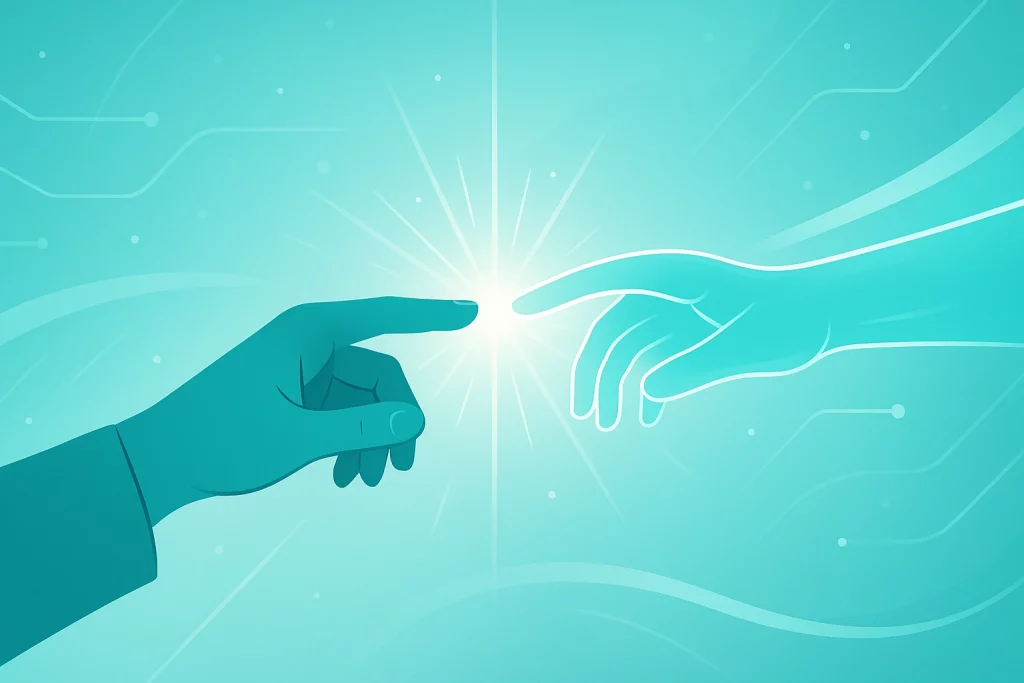
The future will be built by people who partner with intelligent systems, combining emotional depth with analytical power.
Every disruption creates two types of people: those who fear change, and those who shape it.
The winners of the AI era won’t be the ones who work the hardest — they’ll be the ones who learn the fastest.
The future of work isn’t about surviving AI. It’s about designing a life where technology amplifies what makes us human.
💡 Join the AI Academy waitlist or subscribe to the AI Brief for weekly insights on tools, strategies, and stories shaping the future of intelligent work.
Update June 20, 2026: This article was refreshed to improve internal context and discovery signals.